Article · RB02
Match the Person, Then the Player
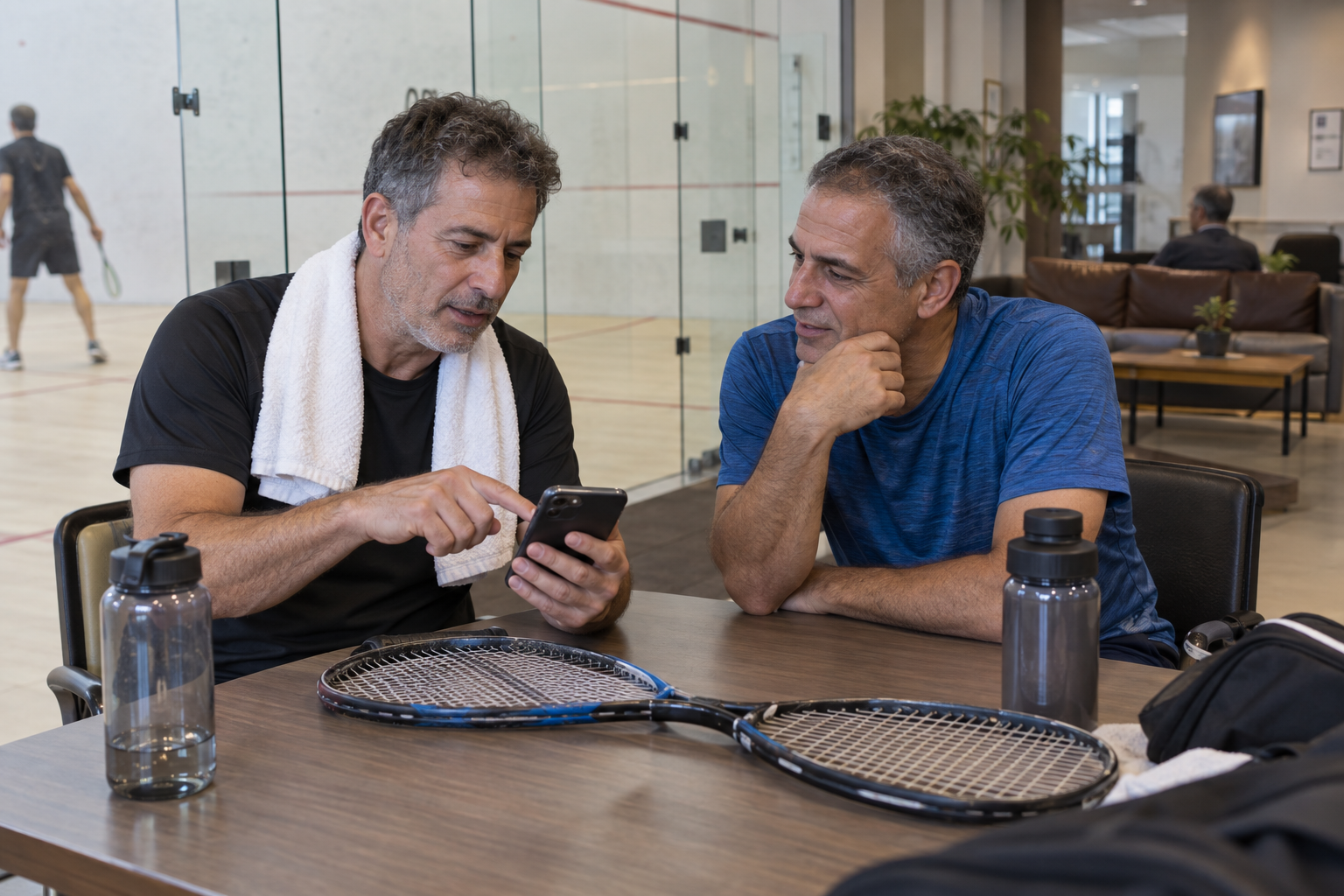
A rating estimates competitive ability; a successful introduction also accounts for purpose, pace, schedule, place and the kind of human interaction each player wants
Three points
- Playing level answers only one matching question. Two equally skilled players may want different intensity, instruction, conversation or commitment.
- Useful matching begins with the session people want to share. Purpose, practical constraints and social preferences determine whether a plausible introduction becomes an actual game.
- RacketBridge should explain each suggestion and learn from voluntary feedback. A transparent, limited first commitment builds more trust than an unexplained compatibility score.
Two players receive the same club rating. One wants a hard match before work, with little conversation and no regular commitment. The other wants forty minutes of cooperative practice, time to talk afterward and a dependable weekly partner. On a ranking list they appear compatible. On court they disappoint each other.
The error lies in the question. A rating asks who might produce a close conventional contest. It does not ask what either person wants from Tuesday evening.
RacketBridge needs ability information, particularly when players seek normal match play. Its larger opportunity is to match the whole appointment: the game, the physical demand, the learning purpose and the people who will share it.
Begin with the desired hour
“Find me an opponent” sounds precise but conceals several different requests. A player may want competition, instruction, repetition, rehabilitation-conscious movement, a social introduction or a chance to try another sport. Each request calls for different information.
The product should therefore ask what would make the session worthwhile. A strong answer describes an observable experience: “controlled length practice followed by two short games,” “a beginner lesson where equipment is provided,” or “a social doubles group that welcomes someone arriving alone.”
This language helps clubs as well as players. A club can place a newcomer into the correct offer instead of treating every inquiry as court rental. A coach knows whether to prepare an introduction, a technical diagnosis or competitive practice.
| Session purpose | Ability information needed | Compatibility that matters more |
|---|---|---|
| Conventional match | Current rating or recent results | Desired intensity, duration and scoring format |
| Cooperative practice | Reliable rally level and target skill | Patience, repetition preference and feedback style |
| First experience | None beyond relevant physical context | Coaching, equipment, safety and beginner welcome |
| Conditioned game | Enough control to follow the condition | Shared purpose and willingness to adapt the rules |
| Regular social game | Broadly workable level | Schedule, location, conversation and reliability |
| Return after time away | Past experience plus a current description | Gradual pace, rest and freedom to adjust |
Separate ability from intensity
Players often use “level” to describe several things at once. Technical control, competitive results, current conditioning and willingness to work hard can move independently. A former league player returning after five years may read the game well but need short rallies and longer rests. A fit beginner may move quickly without controlling the racket safely. An older expert may prefer high-quality, moderate-intensity practice.
RacketBridge should collect these dimensions separately. It should use plain descriptions alongside numbers: “I can sustain ten controlled straight drives,” “I know the rules but have not played a match,” or “I play twice a week and want competition.” A cross-sport player also needs two profiles: established experience in one sport and beginner status in the new one.
| Dimension | Better profile question | Weak substitute |
|---|---|---|
| Control | What kind of rally can you sustain now? | Age or years since first learning |
| Competition | Do you want a scored match, conditioned game or no score? | “Serious” versus “casual” |
| Physical demand | What pace, duration and rest pattern suit this session? | Ability rating |
| Learning | Which decision or shot do you want to practice? | “Improve my game” |
| Social setting | One partner, small group or hosted event? | Assuming extroversion |
| Commitment | One trial, occasional game or recurring time? | A permanent partnership request |
Logistics are part of compatibility
A mathematically attractive match across Jerusalem has no value if neither player will travel. Availability stated as “evenings” still creates work: Tuesday at 7 p.m. near Malcha differs from Thursday at 9 p.m. across town. Cost limits, court access, booking responsibility, language and equipment also decide whether play occurs.
The first introduction should require a small commitment: one purpose, one place, one time, one price and a clear cancellation expectation. Neither player needs to promise a continuing relationship. Afterward, each can privately say whether the pace, purpose and interaction suited them and whether they want another invitation.
Explain the match
An unexplained score such as “92% compatible” creates false precision. A useful recommendation states its reasons: “You both want controlled squash practice on Sunday mornings, prefer moderate intensity and can reach the same club.” It should also state what remains uncertain: one player has no recent rating, or the two have not yet agreed on session length.
RacketBridge should minimize personal information, let users choose which contact details become visible and avoid using age or sex as silent substitutes for ability. Where local social norms or individual preferences affect a comfortable introduction, users should state those preferences directly and respectfully.
| After-session question | What the answer improves | What it cannot prove |
|---|---|---|
| Did the session match its stated purpose? | Offer and description quality | Long-term compatibility |
| Did the pace feel suitable? | Future intensity suggestions | Medical safety |
| Would you play this format again? | Format recommendations | Friendship |
| Would you accept another invitation with this person? | Repeat matching | A permanent partnership |
| What should change next time? | Specific scheduling or session design | A universal player rating |
A match succeeds when people choose to play, recognize the session they were promised and have a simple path to another suitable game. The algorithm is only useful when it helps produce that human result.