Article · RB05
A Passport for Starting
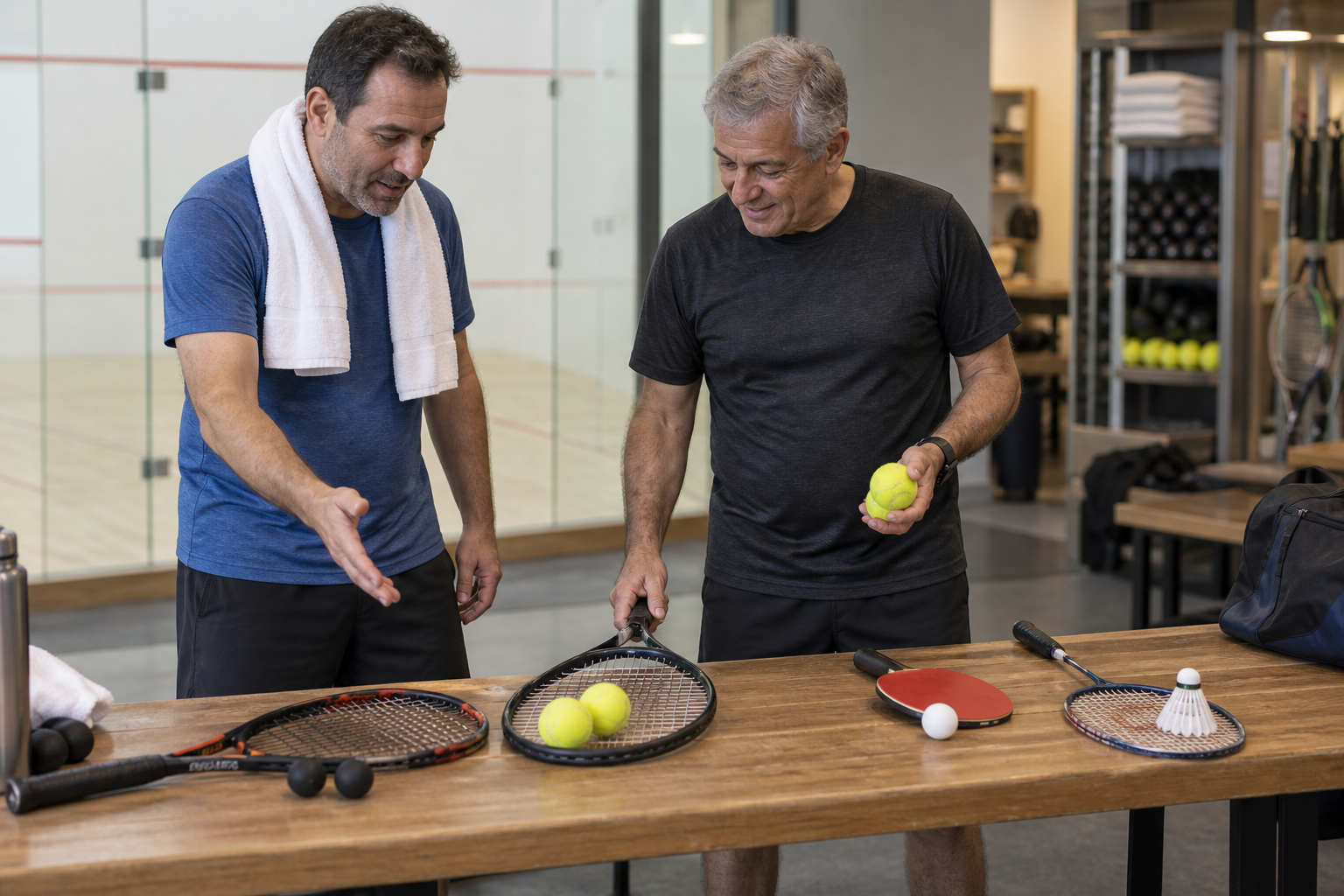
The Jerusalem Racket Passport would turn curiosity into a short sequence of hosted experiences, record what each player learns and reward the second visit instead of ranking beginners across unrelated sports
Three points
- **The passport should organize action, not collect decorative badges.** Every entry represents a hosted experience, a short reflection and a visible next opportunity.
- **Progress means finding play worth repeating.** The passport records people met, movement experienced and interest in returning without pretending that tennis, squash and table-tennis levels share one scale.
- **A credible pilot starts small.** A few approved hosts, one defined route and simple verification will reveal whether the idea helps players and clubs enough to expand.
Many adults say they would like to try another racket sport. The intention remains cheap because it has no date, host or next step. A passport gives curiosity a route through the city.
The proposal is simple: complete several approved introductions within a generous period, record what each sport felt like and choose at least one second visit. The passport borrows the satisfaction of completing a collection. Its real purpose is to move people from abstract interest to recurring play.
Define a meaningful entry
A stamp should correspond to an experience the host can deliver consistently. Watching a demonstration or walking past a club does not qualify. Neither does winning a point. A useful entry combines orientation, active participation and a decision about what comes next.
| Passport entry | Minimum experience | Reflection |
|---|---|---|
| Squash introduction | Safety, grip, controlled front-wall contact and court movement | Which rebound or movement felt new? |
| Table-tennis introduction | Basic serve legality, spin observation and cooperative rally | Which visual cue changed the response? |
| Tennis introduction | Court orientation, controlled groundstroke and rally task | Did the larger divided court appeal? |
| Badminton introduction | Grip, overhead contact, movement and cooperative exchange | How did shuttle flight alter timing? |
| Padel introduction | Safety, doubles positions and a simple wall-rebound task | Did partner play change the experience? |
| Second visit | Another dated session in one chosen sport | Who, what or which goal brought you back? |
The host controls instruction, safety, price, capacity and booking. RacketBridge defines the common information standard and passport record. This division prevents a digital program from overruling the professionals and facilities delivering the experience.
Record difference without inventing equivalence
A tennis rating should not calculate a squash level. A five-shot table-tennis rally is not equal to a five-shot squash rally. Even apparently common terms such as speed, control and endurance describe different tasks.
The passport should record participation and reflection rather than award universal points. A player can note a transferable habit, a skill that needs rebuilding, the functional demand experienced, a person or group worth seeing again and interest in another session.
| Record | Useful interpretation | Interpretation to avoid |
|---|---|---|
| Completed introduction | Experienced the approved beginner format | Achieved competence in the sport |
| Cooperative rally | Sustained the stated task under beginner conditions | Earned a cross-sport performance rating |
| Met a host or group | Received a social route into the activity | Formed a friendship |
| Chose a next session | Expressed concrete interest | Became a retained participant |
| Completed second visit | Returned once | Established a lasting habit |
Give players more than one route
The first pilot might ask adults to try three sports within three months. A later family version could use age-appropriate experiences. A workplace route could combine two introductions and a social final. Experienced players could exchange hosted introductions, with each community teaching newcomers what it values.
Choice matters. Requiring every sport would make facility location and schedule determine completion. A route with alternatives lets participants choose while still encouraging a genuine step beyond the familiar.
Test the passport before promoting the city
A pilot needs three to five willing providers, current offers, explicit prices, a shared description format and one person responsible for resolving problems. Every provider approves its listing. Participants control the visibility of their record and can remove it.
| Pilot question | Evidence to collect |
|---|---|
| Did the route prompt action? | Registrations that became first visits |
| Did people explore? | Participants completing two or more different sports |
| Did reflection help choice? | Specific reasons participants selected or rejected a return |
| Did clubs gain useful customers? | Verified second visits and appropriate group placements |
| Was administration manageable? | Staff time, corrections and support requests |
| Was the reward meaningful? | Participant preference for recognition, next experience or neither |
A prize may increase registrations while attracting people interested only in the prize. The most coherent reward is another useful experience: a guest session, equipment trial, coached group or introduction to a compatible partner. Recognition should celebrate beginning and returning, not imply mastery.
The Racket Passport remains a proposal until hosts and players test it. That status is a strength. A small Jerusalem pilot can show which parts create value before RacketBridge turns an appealing idea into a citywide promise.