Article · CS07
Choose the Second Sport by the Experience
The best second racket sport is the one whose people, movement, learning problem and practical access make another session attractive
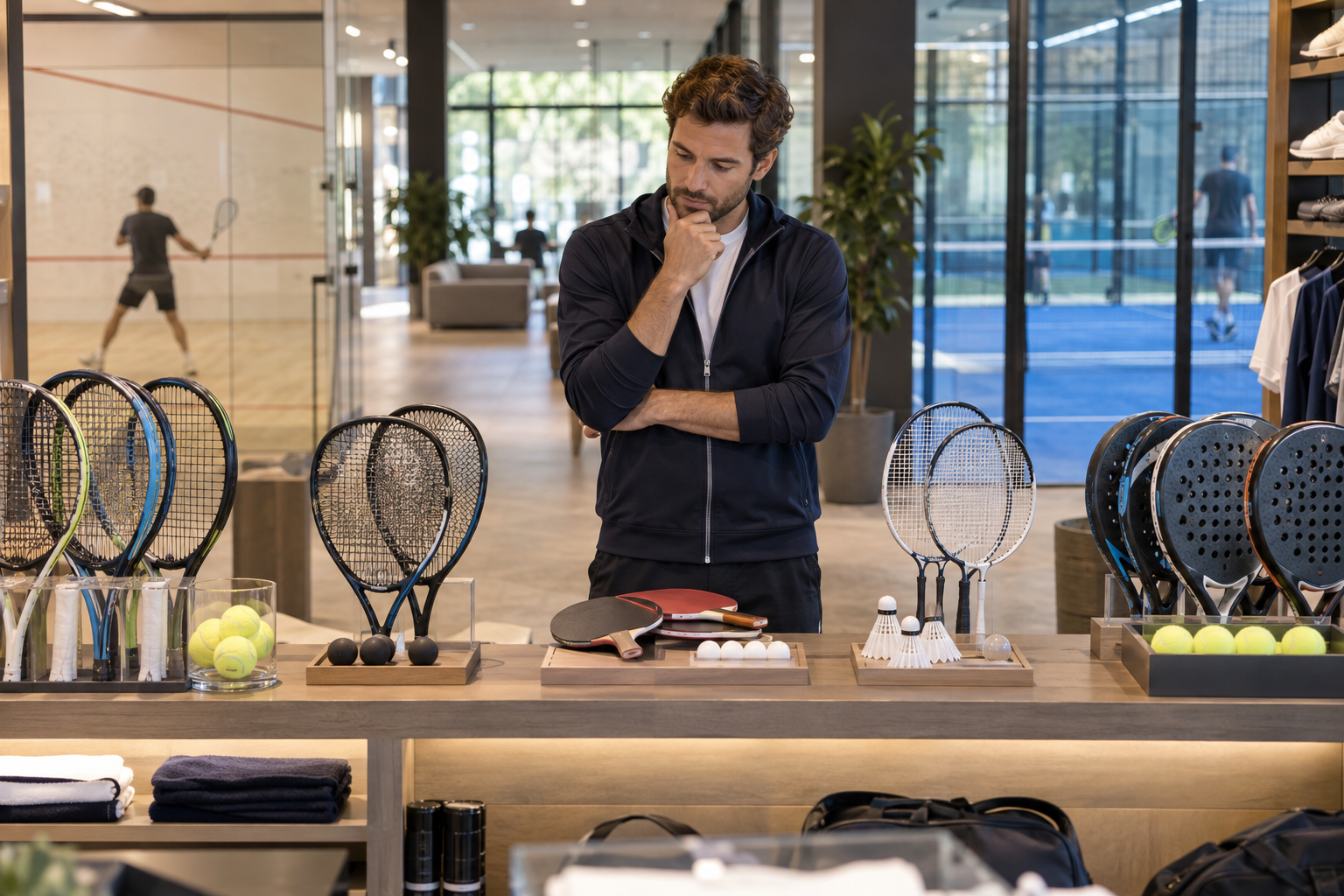
Three points
- **Transfer should open a door, not decide the choice.** Familiar anticipation or wall reading may improve the first lesson without predicting long-term enjoyment.
- **Practical fit determines repetition.** Travel, cost, schedule, equipment and a welcoming entry route matter as much as theoretical compatibility.
- **Two sessions reveal more than a quiz.** The first supplies novelty; the second tests whether the player wants a continuing relationship with the sport.
Players often ask which racket sport most closely resembles the one they know. Similarity helps, but it is rarely the decisive factor. A table-tennis player may enjoy squash because the movement feels new. A tennis player may prefer padel because partnership changes the social experience.
| Desired experience | Sport worth testing | Question to investigate |
|---|---|---|
| Enclosed strategic movement | Squash | Do walls and shared space engage me? |
| Fine spin and rapid exchanges | Table tennis | Do I enjoy compact timing and repetition? |
| Larger outdoor or indoor court | Tennis | Do I enjoy space, bounce and serving? |
| Overhead movement and changing flight | Badminton | Does shuttle timing appeal? |
| Doubles partnership with walls | Padel | Do I enjoy coordinated pair play? |
Apply a practical filter
| Factor | Before booking | After playing |
|---|---|---|
| Access | Travel, hours and booking | Could this fit a normal week? |
| Cost | Lesson, court and equipment | Did the value justify a return? |
| Welcome | Beginner description and host | Did someone explain the next step? |
| Movement | Stated physical demand | Did the pace suit present capacity? |
| Social fit | Individual, pair or group format | Did the interaction feel comfortable? |
| Learning | Introductory objective | Can I name what I want to learn next? |
Use a two-visit decision
| Visit | Purpose | Decision |
|---|---|---|
| First | Safety, basic contact and a playable sample | Is there enough interest for another hour? |
| Second | More normal movement, rally and social context | Is there a workable next month? |
| Continuing | Appropriate group, partner or instruction | Does the sport earn a regular place? |
The second sport need not replace the first. It can widen the player’s network, provide different functional movement and keep racket play available across seasons and stages of life. Choose through lived evidence: a suitable invitation, two honest sessions and a clear next appointment.
Compare the cost of repetition
The advertised lesson price is only one cost. Add travel, equipment, court booking, partner dependence and the mental work of entering an established group. A more expensive venue nearby may support regular play better than a cheaper court that requires a difficult journey. A sport with loan equipment and a hosted beginner group reduces the risk of the first month.
The player should ask who handles the next invitation. A directory entry supplies information; a host who introduces partners and books the second date supplies continuity. RacketBridge should make that difference visible.
Choose for a changing life
The best second sport today need not remain the best forever. Singles squash may provide demanding movement in a short booking. Table tennis may fit a period when compact play or indoor access matters. Padel and doubles tennis may expand the social circle. Badminton may offer a new overhead and movement challenge.
This flexibility is part of functional fitness. A player who understands several RB Sports has more ways to remain active when weather, schedule, partners or physical capacity change. The objective is not collecting identities. It is protecting access to friends, movement and enjoyable skill over time.