Article · CG04
A Ladder Can Measure More Than Rank
A conditioned-game ladder can give unequal players meaningful contests by publishing the purpose, rule and limited meaning of every result
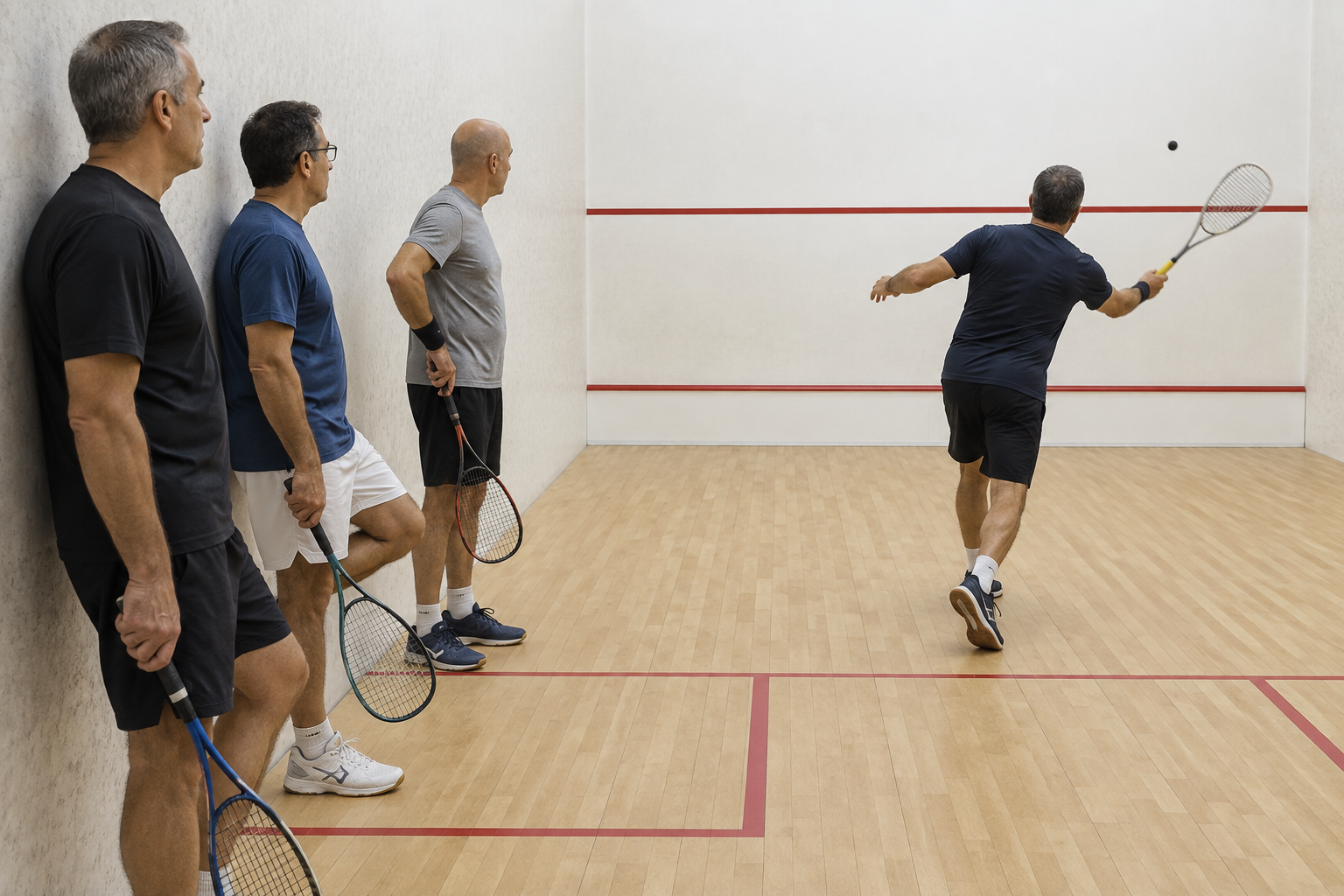
Three points
- **A conventional ladder answers one question.** It ranks results under standard rules, while a conditioned ladder can test depth, patience, movement or partnership.
- **Both players must choose the condition.** Transparent rules, safety review and the right to decline protect dignity and useful competition.
- **Recognition should reward participation without false equivalence.** Completion, partner variety and challenge breadth can sit beside scores without becoming a universal rating.
Ladders solve the social problem of asking for a game. They also turn every game into a verdict on rank. Players expecting repeated losses may stop challenging; stronger players receive fewer useful partners.
A conditioned ladder preserves the invitation and changes the problem being scored.
Publish a small approved menu
| Condition | Training purpose | Safety control |
|---|---|---|
| No hard shots | Placement and recovery | Define “hard” through observable pace agreement |
| Score only after depth | Rally construction | Use a clear rear target |
| Stronger player feeds best side | Repetition under pressure | Review ability to control direction |
| Cooperative opening | Extend decision sequence | Specify when point becomes live |
| Limited court zone | Movement or accuracy focus | Ensure zone does not create interference |
The menu should begin small and receive coach review. Endless customization makes arranging a game harder.
Give every result limited meaning
| Record | Meaning | Meaning to reject |
|---|---|---|
| Match score | Winner under this condition | Universal superiority |
| Target success | Execution of stated objective | Equivalent skill across sports |
| Completed challenge | Reliable participation | Permanent compatibility |
| Repeat with reversed roles | Willingness to learn both tasks | Erasure of ability difference |
| Partner variety | Breadth of participation | Popularity ranking |
Run a transparent pilot
| Pilot element | Rule |
|---|---|
| Eligibility | Published experience range for each condition |
| Consent | Both accept before booking and may decline without penalty |
| Safety | Venue rules and stop decisions override the game condition |
| Dispute | Named organizer and simple review route |
| Privacy | Results visibility chosen by participants |
| Revision | Aggregate feedback changes the approved menu |
After each match, ask whether the condition was clear, useful to both, appropriately difficult and worth repeating. These responses show patterns; they do not create scientific laws.
The first Jerusalem pilot should attach to a willing club or supervised group. Success means more completed games, broader partner choice and less fear of an imperfect score. The purpose is not a flawless ranking. It is a reliable invitation to play, improve and meet again.
Protect the stronger and developing player alike
The stronger player needs a task demanding enough to prevent careless hitting. The developing player needs a condition that creates reachable problems without public condescension. Examples should direct the stronger player toward precision, patience or the partner’s best side, not simply prohibit winning.
Review the condition after one short game. If one player cannot influence the contest, change one rule rather than adding several exceptions. A ladder remains credible when both participants can explain what the game tested and why the result has limited meaning.
The system should never use age, sex or friendship popularity as a hidden competitive adjustment. Conditions should respond to observable play and mutually chosen objectives. Participants control profile visibility, and organizers intervene when behavior undermines safety or dignity.