Article · TS05
The Serve Starts a Three-Shot Problem
A squash serve earns value through the return it produces and the position the server keeps, making serve, return and third shot one connected tactical exchange
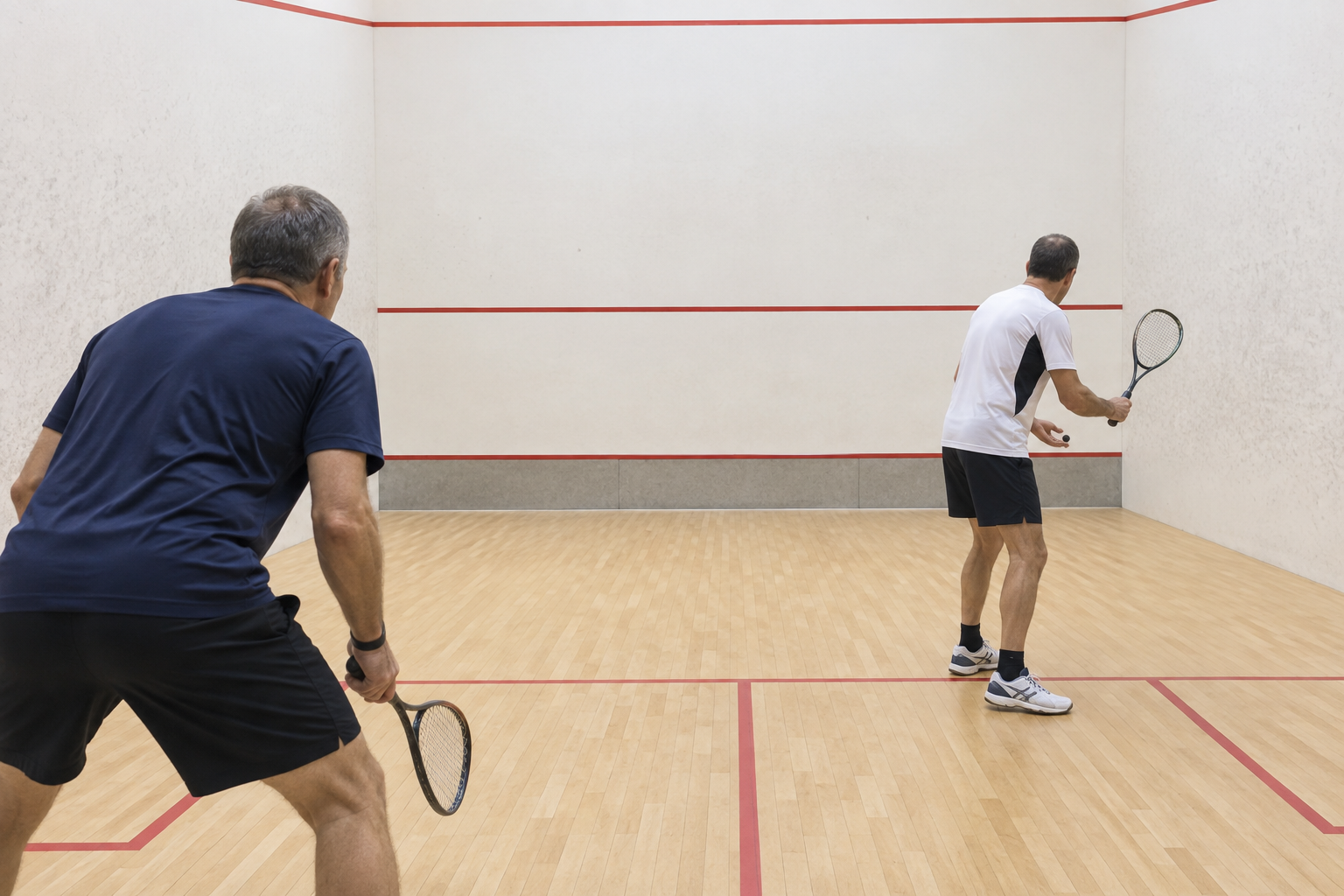
Three points
- **Reliability precedes variation.** A legal serve with repeatable height, width and depth gives the server a stable opening plan.
- **The server must prepare for the return.** Recovery and observation determine whether placement becomes an advantage.
- **The receiver seeks position, not an instant winner.** A controlled return can remove pressure and limit the third shot.
Recreational players often practice serves until the ball lands in the correct quarter, then collect another ball. The exercise tests legality and rough placement. It omits the reason placement matters: the receiver’s contact and the server’s next opportunity.
Design the intended return
| Serve variable | Intended problem | Risk |
|---|---|---|
| Height | Carry ball beyond comfortable volley | Short trajectory becomes attackable |
| Side-wall relationship | Restrict racket space | Central ball permits free swing |
| Depth | Move receiver behind server | Easy back-wall rebound |
| Pace | Reduce preparation time | Fast loose ball returns quickly |
| Variation | Change anticipation | Unreliable execution loses the plan |
Current legality must come from World Squash rules, not memory or an older coaching book. Once the serve is legal and dependable, variation needs a stated purpose.
Audit the first three contacts
| Contact | Question | Useful outcome |
|---|---|---|
| Serve | Did placement create the intended receiving problem? | Receiver contacts under restriction |
| Return | Did receiver restore space and limit attack? | Ball reaches useful depth or width |
| Third shot | Did server respond to actual return? | Choice fits ball rather than preset plan |
Practice the sequence
| Block | Task | Record |
|---|---|---|
| Placement | Ten serves to one lane | Legal serves reaching target |
| Serve plus return | Receiver uses one controlled option | Quality of receiver contact |
| Two return choices | Server reads straight or crosscourt | Correct third-shot preparation |
| Conditioned point | Bonus for depth before attack | Whether opening position survives score |
Review twenty match points and note where the opening lost value. A weak fifth shot may begin with a return that conceded the center. The exercise turns serve practice from isolated accuracy into the start of tactical analysis.
Choose the serve for the receiver
A lob serve may trouble a shorter player or someone reluctant to volley. A hard body serve may reduce preparation time but return quickly if it sits centrally. Repeating one serve can build reliability while also making the pattern obvious. Variation should respond to evidence from this opponent.
The receiver needs the same analysis. From a restricted back-corner contact, height and straight length may restore position more effectively than an attempted winner. A strong return does not need to end the rally; it needs to remove the server’s easy third shot.
Review pressure separately from legality
A serve can be legal and tactically weak. It can also miss narrowly because the player attempted unnecessary precision. Track legal percentage, target quality and the return produced as three separate measures. This prevents a player from improving accuracy by serving harmlessly or chasing pressure while donating faults.
The opening also changes with score and confidence. Under pressure, a reliable serve to a useful area may protect decision quality better than an ambitious variation. Record whether faults cluster at particular scores and whether recovery changes when the player expects a weak return. These observations create a match routine: select target, serve, clear, find the receiver and prepare for the likely reply.