Article · TS04
The Lob Buys More Than Time
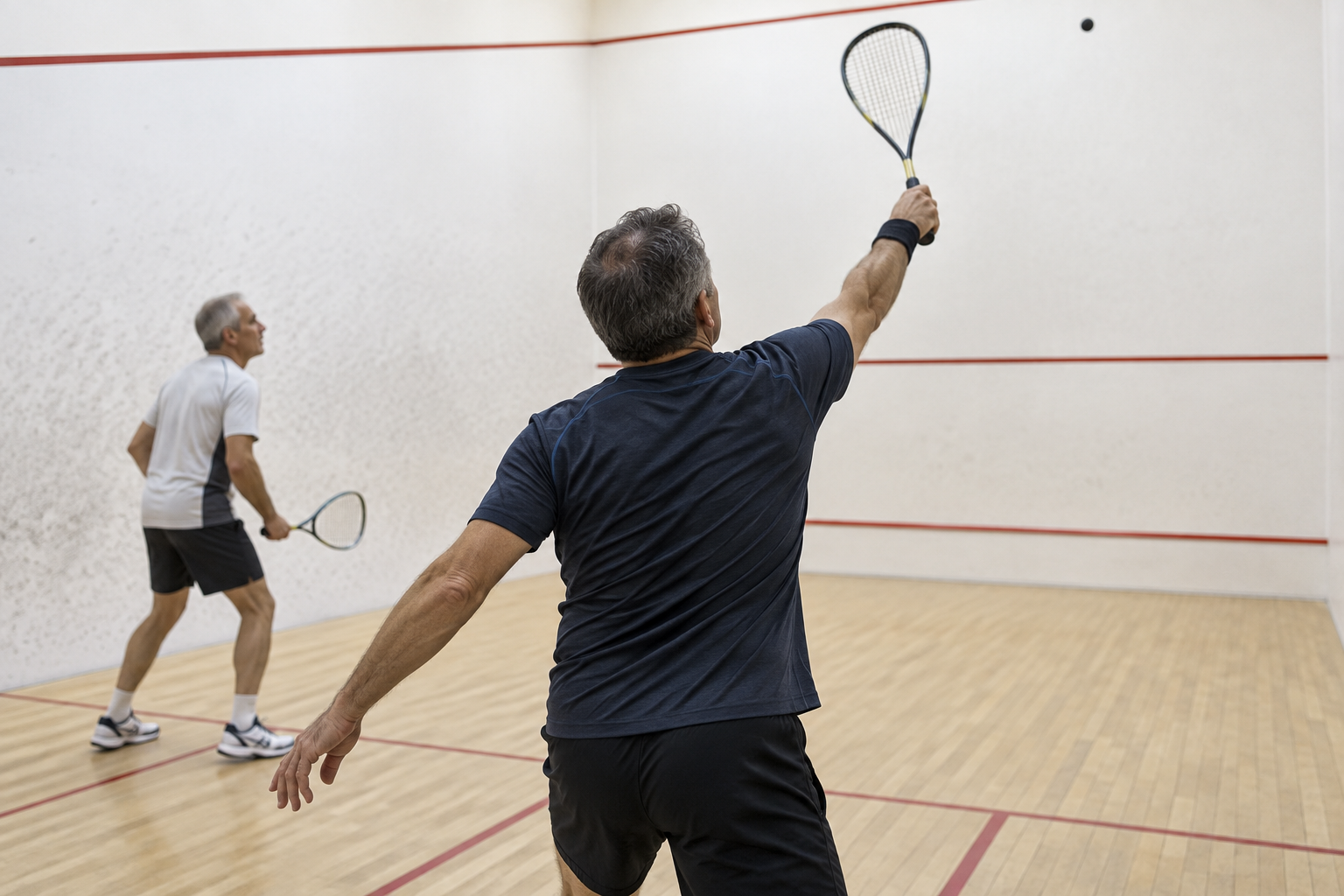
A high, deep squash ball can relieve pressure, move an opponent behind the striker and disrupt a fast rhythm, provided height, width and recovery work together
Three points
- **Height changes the time available to both players.** From front-court difficulty, it can let the striker clear and regain useful position.
- **A lob succeeds through depth and width as well as height.** A short or central ball may give the opponent an easy volley.
- **The shot belongs inside a tactical sequence.** Players must select it from a suitable contact, recover and prepare for the reply it invites.
The lob often appears as an emergency shot, used when a player reaches the front corner late. It can also attack rhythm. A player who dominates flat exchanges must move back, look upward and generate a different contact.
Judge four operating variables
| Variable | Useful result | Failure |
|---|---|---|
| Height | Clears the opponent’s volley reach | Low trajectory invites interception |
| Width | Holds ball near side wall | Central path opens attacking swing |
| Depth | Carries opponent behind striker | Short landing concedes position |
| Pace | Allows height and length to develop | Excess pace flattens trajectory |
| Recovery | Uses added flight time | Player remains trapped in front corner |
Height alone does not define quality. The ball must reach an area that makes the opponent’s reply difficult without creating an easy back-wall rebound.
Select the lob honestly
| Situation | Lob value | Alternative to consider |
|---|---|---|
| Late but balanced in front | Creates clearance and time | Simple straight defensive ball |
| Opponent crowds forward | Sends play behind opponent | Firm length if contact supports it |
| Opponent thrives on pace | Changes rhythm | Slower straight length |
| Ball too low or behind body | Ambitious execution risk | Highest controllable recovery shot |
| Strong balanced front position | Disguised attacking lob possible | Drop or drive from same preparation |
Practice the sequence
Begin from a controlled front-court feed. Award one point for clearing an imaginary volley line, one for landing in a rear target lane and one for safe recovery before the next feed. Add an opponent only after the path becomes repeatable.
| Layer | Task | Success measure |
|---|---|---|
| Path | Fixed feed to high rear target | Height and depth combine |
| Movement | Arrive, lob, clear and recover | Balance survives front-court travel |
| Choice | Lob or drive from visible cue | Player selects rather than presets |
| Rally | Opponent may volley or retreat | Striker reads actual reply |
| Pressure | Bonus for regaining position through height | Tactical purpose survives score |
Disguise enters last. A deceptive lob that creates unsafe racket space or unreliable direction has no recreational value. First make the ball, recovery and next decision work as one sequence.
Use the lob against a real opponent
Players differ in movement, height, volley confidence and comfort near the back wall. Record what happens after ten well-executed lobs. Does the opponent volley, retreat early, allow the ball to rebound or answer with another high ball? The response determines the next plan.
A lob that fails against one opponent may remain tactically sound against another. The player should evaluate the shot by the position and reply it creates, not by whether it looks defensive. Height is a way to manage time, and time becomes useful only when the striker observes and acts during it.
The player should also compare forehand and backhand lobs rather than assume equal reliability. Match evidence may justify using one as a dependable recovery shot while the other remains a technical project. Tactical honesty means choosing the version available today.