Article · TS03
Position Creates Power
Squash players gain pressure by controlling access, depth and recovery before adding pace, because the player who owns the next useful position receives more attacking opportunities
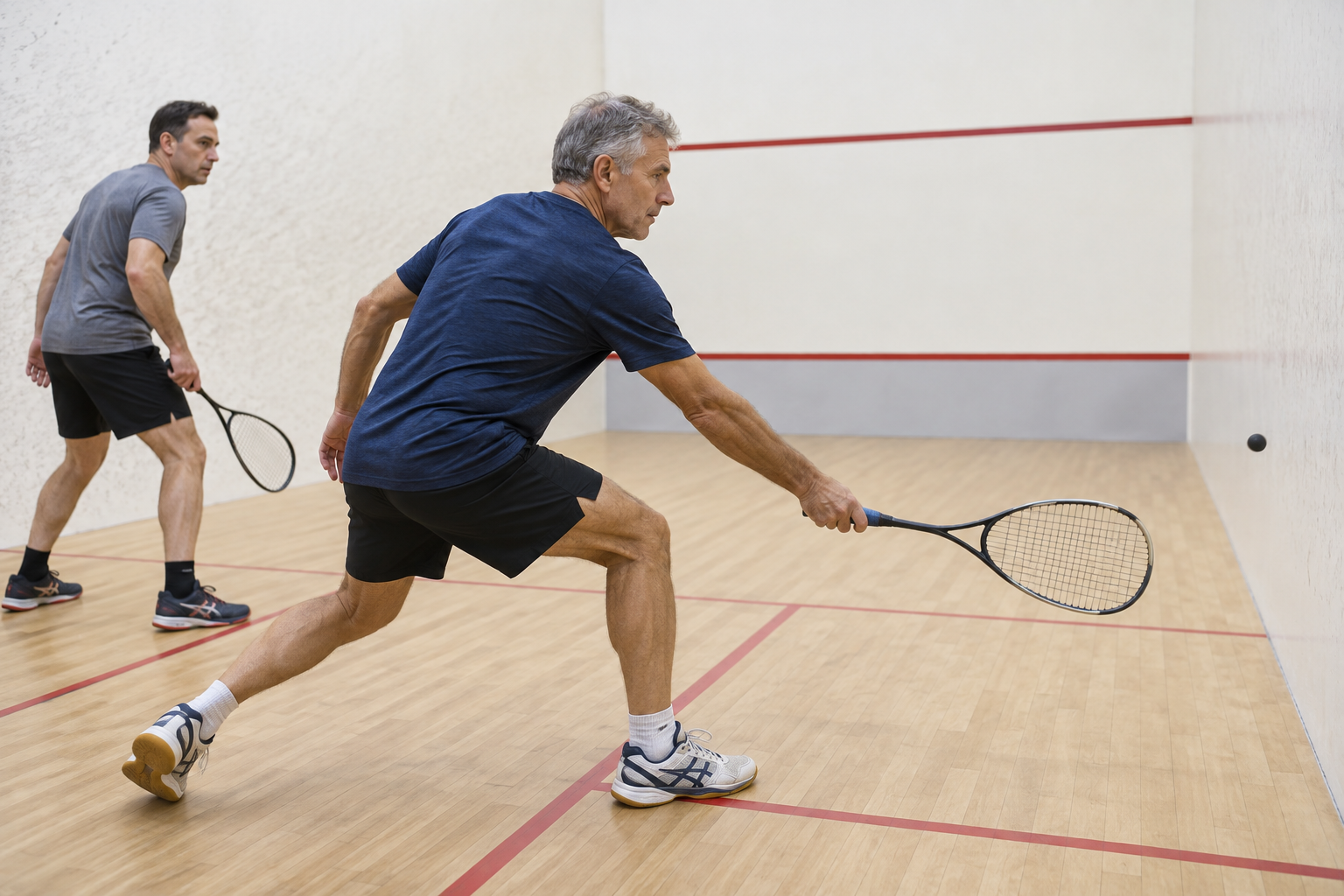
Three points
- **The T is a reference, not a compulsory mark.** Recovery position changes with shot quality, opponent access and likely reply.
- **Length and width can create pressure without exceptional pace.** A deep tight ball reduces the opponent's space and protects the striker's recovery time.
- **Attack should follow evidence.** Ball quality and balanced arrival determine whether to defend, rally or apply pressure.
Power makes an immediate sound. Position works more quietly. A player sends a moderate straight drive close to the wall, recovers in balance and receives a loose reply. The next shot looks like the winner; the previous two actions created it.
Recover in relation to the shot
The central T area offers efficient access to four corners, but blindly touching one point can produce over-recovery, collisions or poor coverage. A tight straight length, loose crosscourt and short boast create different probable replies.
| Shot produced | Positional consequence | Recovery question |
|---|---|---|
| Tight straight length | Opponent has restricted swing and direction | Can I hold useful central access? |
| Loose straight ball | Opponent may attack or volley | Am I clear and ready for shorter reply? |
| Crosscourt with width | Ball may pass opponent into back corner | Which volley or straight response remains open? |
| Short attack | Opponent moves forward | Can I recover without blocking direct access? |
| Defensive height | More travel time | Did I use that time to regain balance? |
Create pressure through geometry
| Variable | Pressure created | Common failure |
|---|---|---|
| Length | Moves opponent behind short line | Ball rebounds comfortably from back wall |
| Width | Restricts swing near side wall | Ball opens toward center |
| Height | Buys time and changes contact | Short ball invites volley |
| Pace | Reduces time when accurate | Hard central ball returns quickly |
| Recovery | Protects likely replies | Player admires shot or stands mechanically |
Train position visibly
Place removable target lanes and a reference zone near the T. In ten rallies, record whether the player contacted in balance, sent the opponent behind the short line and recovered before the next strike. Do not award a point for pace.
| Pattern found | Next practice |
|---|---|
| Good depth, late recovery | Hit-clear-observe sequence |
| Early T arrival, poor clearing | Shared-space movement review |
| Hard shots through center | Width target at moderate pace |
| Attack from difficult ball | Defend-rally-attack condition |
| Strong position, weak finish | Technical work on the earned opportunity |
Position does not replace technique or fitness. It organizes them. A player with modest pace can make the opponent travel, preserve personal balance and choose when power has a real tactical purpose.
Read position from both players
Court control is relational. Standing near the T has limited value if the opponent is balanced on a loose ball with several attacking choices. A player farther from the exact center may still control the rally after producing tight length that forces a predictable reply.
During video review, pause when the opponent begins the forward swing. Mark both players, the ball and the open court. Ask which replies remain credible and how much movement each would demand. This frame often explains the next two shots better than the eventual winner.
For recreational players, better position also manages energy. Repeatedly recovering too far, attacking from imbalance or sending the ball through the center creates unnecessary running. Efficient position does not remove physical demand; it directs effort toward balls the player can influence.