Article · SS09
Take Time From the Attacker
Against an early volleyer or natural attacker, better passage, disciplined recovery and controlled changes of rhythm reduce opportunities more reliably than trying to attack first
Three points
- **Deny the intercepting zone before adding pace.** Straight width and crosscourt trajectory must pass outside comfortable reach; a faster loose ball only reaches the volleyer sooner.
- **Make early contact carry a cost.** Use depth, height and repeated movement so the volleyer must balance interception against difficult recovery and balls that should be allowed to pass.
- **Protect your own decision quality.** A natural attacker invites rushed competition for initiative, but the advanced amateur should defend, construct or attack according to the actual ball.
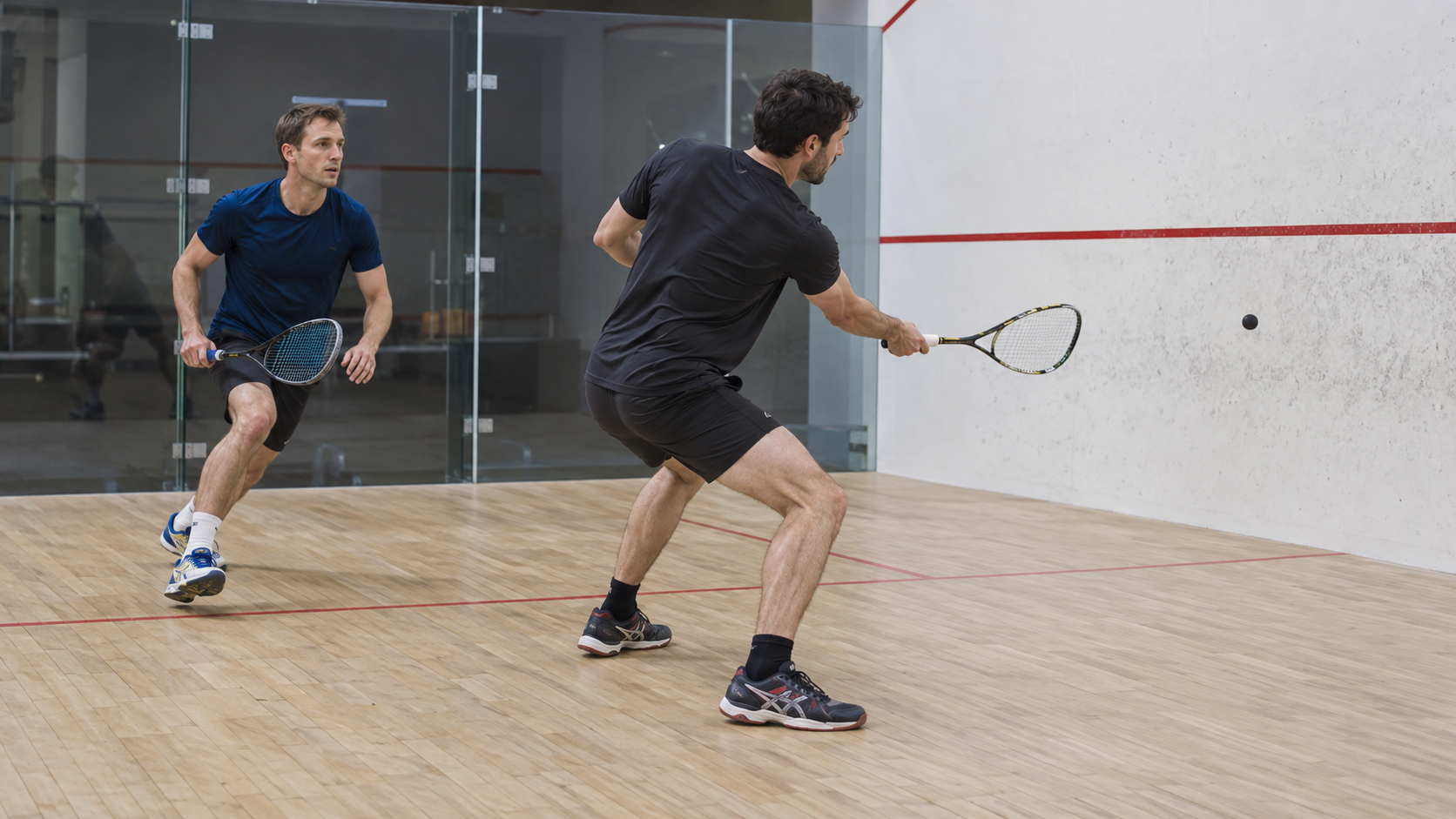
An early volleyer changes the perceived size of the court. Crosscourts that normally reach the back disappear near the T. Floating defensive balls return before recovery. The opponent seems to attack everything, and the frustrated player responds by hitting harder through the same available racket.
The first strategic problem is not the opponent’s aggression. It is passage. Can your ball travel beyond central reach without becoming loose? Straight width shortens exposure to interception. A crosscourt needs enough height, width or pace to pass outside the opponent’s volleying window. A lob must rise before it enters that window, not after.
Elite match analysis shows that volleys and attacking shots reduce time, but it does not give amateurs a universal trajectory. Court, ball temperature, opponent reach and individual control alter the practical margin. The player should measure outcomes: intercepted, passed under pressure, or passed comfortably.
Audit the ball before blaming speed
Volleyers thrive on predictable central routes and late preparation. The opponent may look exceptionally fast when your ball travels directly into a prepared racket.
Tactical-diagnosis table
| Repeated problem | Likely cause | First adjustment | What success looks like | Counterproductive response |
|---|---|---|---|---|
| Crosscourt volleyed near T | Diagonal enters comfortable reach | Increase outside width/height or choose straight ball | Opponent retreats or contacts stretched | Hitting harder through same line |
| Defensive lob volleyed | Ball rises too late or too centrally | Create earlier height and safer passage | Ball clears racket before descent | Slowing ball without changing trajectory |
| Straight ball volleyed short | Width or depth allows body separation | Tighten side-wall relationship and vary pace | Volley opportunity becomes lower or later | Aiming only deeper while staying loose |
| You rush because opponent stands forward | Presence changes your selection | Reclassify ball and use normal margin | Fewer forced attacks from neutral position | Trying to win initiative on every contact |
| Volleyer takes everything but tires little | Interceptions are comfortable and recovery short | Make volley decision harder through height and width | Some balls pass; stretched volleys lose quality | Extending rallies without changing geometry |
| Opponent volleys but leaves front exposed | Early contact carries recovery cost | Prepare counter into space after weak volley | Second ball becomes your opening | Watching the volley instead of moving |
| Your straight play becomes predictable | Passage improves but opponent camps on line | Add hold and earned crosscourt | Opponent cannot pre-commit | Abandoning width for random variation |
| Score pressure increases interception errors | Targets shrink and preparation rushes | Use larger passage targets and full preparation | Ball clears central racket more often | Treating caution as soft central play |
Force the volleyer to choose
Volleying has benefits and costs. It removes time, but it requires early preparation, correct spacing and controlled landing. A ball with strong width may be technically reachable yet tactically poor to volley. A high ball may force contact above a comfortable zone. A pace change can disrupt timing. Repeated depth may pull the base backward enough to open the front.
The goal is not to prevent every volley. It is to reduce comfortable volleys and prepare for the stretched ones. If the opponent reaches across the body and produces a loose short ball, the initial length succeeded. If the opponent volleys tight and recovers cleanly, reassess passage rather than declaring all length ineffective.
Straight play helps because it narrows angles and supports direct recovery. It also becomes predictable if used without hold or pace variation. Earn the crosscourt: move the opponent toward the side, create a late recovery or disguise the diagonal from stable preparation.
Recover for the ball that returns early
Against a deep player, you may complete recovery before the return. Against a volleyer, the next ball may leave the opponent’s racket almost immediately. Finish your shot under control, watch through contact and begin recovery without following the ball.
Serve and return deserve special attention because they establish the first passage problem before either player is fatigued. Record where the return crosses the court and whether the server volleys from balance. A safer return that reaches the side wall may create more usable time than a harder return through central reach.
This does not justify occupying the opponent’s space. The current rules protect direct access, fair view and freedom to strike. When your loose ball gives the opponent an early volley, safety and access come before fighting for the T.
Opponent-response and counter-response table
| Your adjustment | Volleyer’s likely response | Information revealed | Your counter-response | Risk to manage |
|---|---|---|---|---|
| Tighter straight width | Waits on straight line or lets ball pass | Whether opponent’s strength is interception or rear-court play | Add hold, pace change or earned crosscourt | Becoming mechanically predictable |
| Higher outside crosscourt | Retreats or attempts stretched volley | Reach and comfort at height | Take weak volley early; repeat if passed | Floating ball that still enters central reach |
| Slower tight length | Steps in to generate pace | Ability to create attack without supplied speed | Use hold and movement after commitment | Ball sitting short because pace is too low |
| Firm body line from appropriate position | Clears central space or blocks with compact volley | Comfort under reduced swing room | Recover for straight and short replies | Safety, obstruction and loose central rebound |
| Repeated depth | Base moves backward | Willingness to surrender front territory | Use drop or hold only after displacement | Forcing short before base actually changes |
| Pace variation | Volley timing becomes less certain | Dependence on rhythm | Preserve same preparation and alternate trajectory | Variation without width |
| Early volley of your own | Opponent faces reduced recovery time | Quality of attacker’s defense | Continue to length before forcing finish | Turning match into reckless first-strike contest |
| Deep serve variation | Return contact changes | Preferred return and preparation | Position for predicted family, then update | Serving for an ace rather than third-ball advantage |
Adapt to different attackers
An intercepting volleyer hunts central passage. Prioritize width and trajectory. A front-court attacker may volley less but shoot quickly from loose balls; prioritize depth and recovery. A power attacker compresses time after stable contact; vary pace and force movement. A counterattacker waits for your low-margin attack; build before opening the court.
A skilled opponent may combine all four. Use behavior under a specific condition. “When my backhand crosscourt leaves the wall, he volleys straight short” is more useful than “he is attacking.”
Retrievers also change the plan. If the attacker volleys early and retrieves the response, one passage improvement will not finish the rally. Continue construction. Against an older economical volleyer, repeated stretched contact and recovery may matter more than one long sprint. Against a shooter, a ball that passes the volley can still invite an attack from the back if it sits away from the wall.
Distinguish what is known
Research evidence: Elite squash studies relate time, court position, shot type and offensive outcomes. Current analyses show less time available in modern elite men’s squash than in earlier rule contexts. These findings describe elite play and do not set amateur pace or volley targets.
Established coaching principle: Width, height, straight play, early preparation and recovery are recognized responses to volley pressure. Coaches teach players to make the opponent volley from less comfortable positions rather than attempting to eliminate the stroke.
RacketBridge editorial judgment: The passage audit and comfortable-versus-stretched volley distinction provide practical feedback for advanced amateurs. They are observational tools, not formal performance metrics.
Condition passage and response
The volleyer should remain free to intercept. A condition that prohibits volleys removes the decision the other player must learn to solve.
Conditioned-game progression table
| Stage | Condition | Tactical target | Measure | Transfer test |
|---|---|---|---|---|
| 1. Passage classification | Every crosscourt is marked intercepted, passed under pressure or passed comfortably | See trajectory outcome | Distribution of three outcomes | Normal rallies with silent count |
| 2. Straight-width game | Bonus when tight straight ball passes and produces rear contact | Improve width without banning crosscourt | Opponent contact position | Remove bonus and track voluntary straight use |
| 3. Volley-quality game | Volleyer scores bonus only for balanced volley followed by useful recovery | Distinguish reach from quality | Comfortable versus stretched interceptions | Ordinary scoring; both players review five volleys |
| 4. Earned crosscourt | Crosscourt bonus available only after opponent has been moved toward one side | Build diagonal passage | Interception rate after displacement | Remove condition and identify earned changes |
| 5. Style switch | Opponent alternates between volleying and staying deep | Read current base | Time needed to adjust trajectory and short play | Switch without announcement |
| 6. Match transfer | Play from 7–7 under normal rules | Preserve selection under attacking pressure | Forced attacks, passage and recovery | Compare with baseline game against same player |
The best answer to an attacker is not automatic aggression or retreat. It is a ball that reaches its intended problem and a recovery prepared for the earlier reply.