Article · SS08
When the Ball Keeps Coming Back
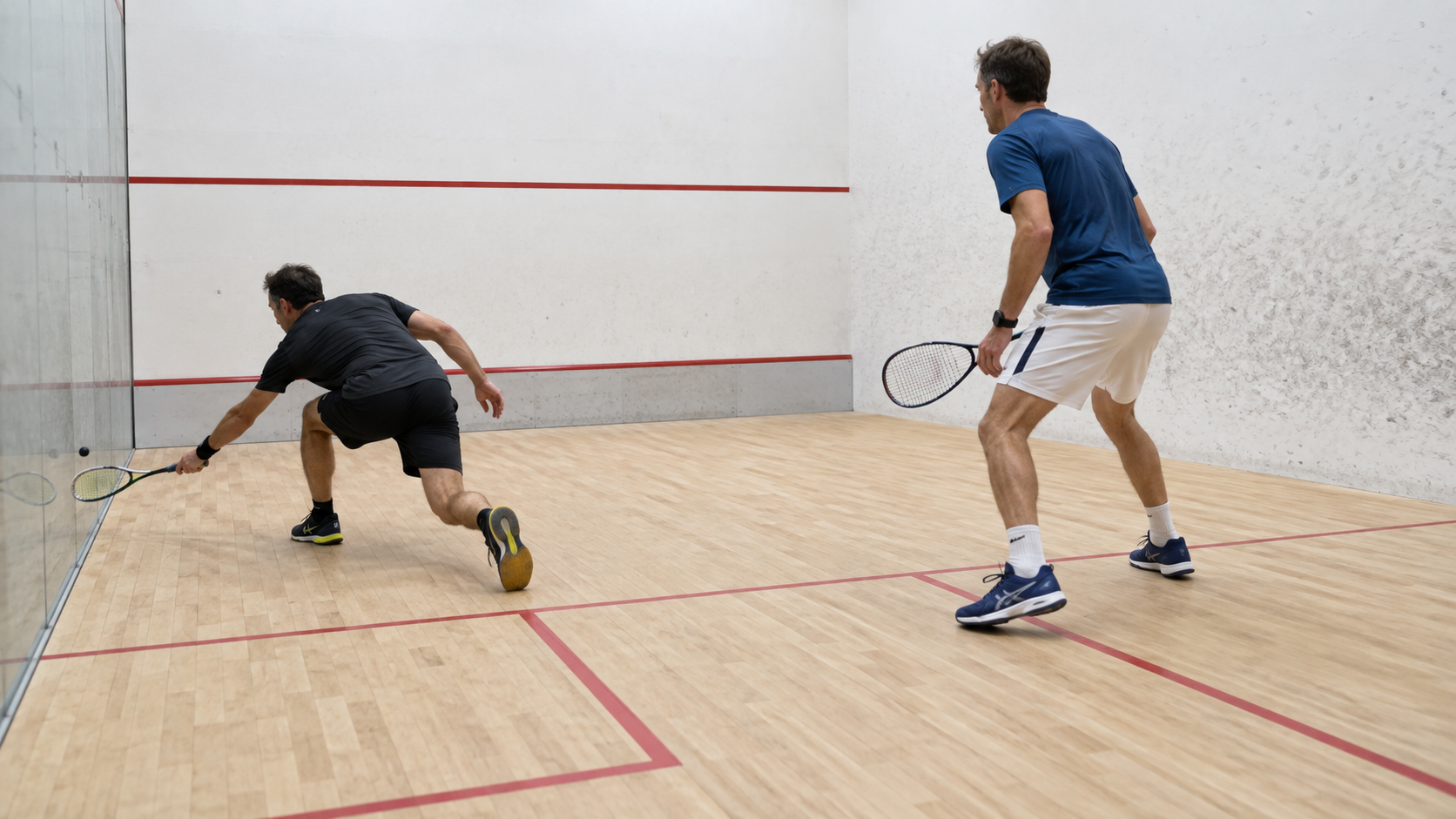
Beating a retriever requires construction, continuation and emotional discipline because the first successful retrieval often exposes the space or recovery weakness that decides the next exchange
Three points
- **Retrieval changes the attacker’s standard of success.** The first attack should create a weaker position or reply, while the attacker remains prepared to play the next ball.
- **Movement quality matters more than visible effort.** Repeated direction, late changes and attacks on recovery test a retriever more intelligently than harder hitting into familiar routes.
- **Patience must remain purposeful.** Safe length without variation may let the retriever settle; controlled pressure should accumulate until a clear attack trigger appears.
The retriever creates a psychological tax. A ball that would finish many club rallies comes back, and the attacker interprets survival as failure. The next drop aims lower, the next drive travels harder and the next error arrives earlier. The retriever’s greatest weapon may therefore be the opponent’s revised risk tolerance.
The answer is not passive patience. It is a different attacking model. Treat the first attack as a displacement shot and the return as information. Did the retriever arrive late, recover poorly, lift predictably or overrun? The second phase should address that consequence.
Research does not establish a universal anti-retriever sequence. It does show that squash outcomes depend on opponent interaction and that the same shot produces different pressure according to movement and situation. The practical work belongs to observation: which retrievals preserve balance, and which merely touch the ball?
Distinguish reach from recovery
A retrieved ball can still represent tactical success. The defender may reach it at full stretch, leave a loose lift and remain outside useful position. The attacker loses the advantage only by failing to continue.
Evaluate four stages:
- Arrival: early and balanced, or late and reaching?
- Contact: controlled choice, or emergency return?
- Exit: direct recovery, or extra steps and turn?
- Next readiness: able to cover the next credible attack, or still rebuilding?
Tactical-diagnosis table
| What happens after your attack | Meaning | Next objective | Better choice | Mistake to avoid |
|---|---|---|---|---|
| Retriever arrives early and counters well | Attack was predictable or insufficiently built | Restore construction and alter setup | More depth, hold or different direction | Aiming closer with the same preparation |
| Retriever reaches late and lifts loose | Attack created pressure | Take position and play second phase | Volley to length or controlled repeat attack | Attempting a spectacular finish while moving |
| Retriever reaches but overruns front | Recovery is vulnerable | Use hold or play behind recovery | Balanced counter-drop or lift behind | Hitting immediately without reading feet |
| Retriever survives deep pressure but stays behind | Territory remains yours | Preserve front position | Volley, repeat depth, then short | Retreating automatically after every return |
| Long rallies remain comfortable for retriever | Pattern lacks displacement or pace change | Change route and timing | Repeated direction, hold, height variation | Simply increasing rally speed |
| Your errors rise after good retrievals | Emotional response changes selection | Restore attack criteria | Larger target and expected continuation | Treating opponent’s effort as your tactical failure |
| Retriever slows but contact stays accurate | Visible fatigue has not become tactical weakness | Keep testing without forcing | Repeat costly route and watch recovery | Shooting because opponent looks tired |
| Retriever begins attacking early | Opponent adapted to your patient pattern | Improve passage and protect initiative | Tighter width, earlier volley, varied sequence | Continuing to use “retriever” as fixed label |
Make the second movement different
Fast players often recover well from one predictable demand. More useful pressure changes direction, distance, height or timing after the first retrieval.
A deep ball followed by a short ball is obvious front-to-back movement, but the reverse can work if the front attack produces a weak lift. Repeating the same direction may punish overrecovery. A held shot can delay the first step. Height may move the opponent’s gaze and contact point. The choice should follow the retrieval, not a memorized alternation.
The attacker must also manage personal cost. Wildly opening the court makes both players run. Straight pressure narrows the answer set and often lets the attacker retain position. The goal is asymmetric movement: the retriever solves larger or later problems while the attacker moves through shorter, earlier routes.
Preserve emotional margin
Against a retriever, frustration changes mechanics. The player rushes preparation, reduces target size or swings harder than balance supports. Use an objective attacking trigger:
- opponent contacts behind the body;
- ball separates from the wall;
- opponent remains behind after recovery;
- weak lift enters comfortable volley height;
- opponent moves in the wrong direction;
- repeated movement produces visibly poorer contact.
If no trigger appears, construct again. This is not fear of attack. It is refusal to let the opponent’s identity replace the ball’s quality.
Opponent-response and counter-response table
| Retriever variation | Its strength | Your first plan | Likely adaptation | Your next response |
|---|---|---|---|---|
| Deep retriever | Absorbs length and returns safely | Take ball early; use hold and front space | Moves forward sooner | Reintroduce depth behind movement |
| Front-court sprinter | Reaches drops explosively | Build depth and prepare second shot | Counter-drops or lobs | Stay balanced and read contact rather than crowding |
| Counterattacking retriever | Turns loose pressure into offense | Use straighter attacks with continuation | Waits for predictable straight line | Add hold or safe change after displacement |
| High, defensive retriever | Buys time and resets | Volley selectively to preserve territory | Raises trajectory beyond reach | Let deep ball pass when volley would be stretched |
| Fitness retriever | Maintains movement across long phases | Change quality and direction, not just duration | Settles into your rhythm | Vary pace and use repeated direction |
| Anticipating retriever | Starts early from pattern recognition | Preserve disguise and vary sequence | Delays commitment | Use open space with normal margin |
| Aging economical retriever | Reads early and avoids wasted steps | Test second recovery and late changes | Uses height to restore time | Take territory without rushing finish |
| Retriever turned attacker | Uses your conservative play to step forward | Protect passage and reclaim width | Mixes styles | Abandon fixed label and scout current choices |
Use the court, not the reputation
The word retriever can make the attacker try to prove power. A better match plan begins neutrally. Establish width. Find whether the player prefers straight or crosscourt escapes. Test front recovery once, then test the next recovery. Notice whether high pace helps the defender use your speed or whether slower balls disrupt timing.
The score matters. At a close score, the retriever may rely even more on the attacker’s impatience. Keep the trigger visible and target large enough to continue. At a comfortable lead, do not turn the game into an exhibition of winners; preserve the pattern that created advantage.
Serve and return provide another useful test. A serve that produces a predictable defensive return lets the attacker begin with position rather than immediate risk. Against a retriever who returns safely to length, the server should resist forcing the third ball short merely because the pattern is familiar. Use the return to locate the opponent, establish width and begin the planned two-phase attack. When receiving, choose a return that prevents the retriever from occupying the T without effort. This opening discipline matters because patient players accumulate advantage from opponents who begin every rally in a hurry.
Video review should count decisions rather than distance covered. Mark the first attack, the quality of the retrieval, the attacker’s next shot and the defender’s recovery. Five examples often reveal whether the attacker loses through poor construction, failure to continue or frustration after sound defense. The distinction determines the next practice game.
Clarify the authority
Research evidence: Squash performance research shows opponent-dependent behavior, contextual shot outcomes and differences in pressure imposed by similar shots. It does not define “retriever” scientifically or prove the exact sequences recommended here.
Established coaching principle: Recognized coaching advises constructing openings, moving opponents, retaining the T and expecting capable players to retrieve attacks. Variation, hold and disciplined continuation are accepted tactical tools.
RacketBridge editorial judgment: Arrival–contact–exit–readiness and the “second movement” principle help advanced amateurs evaluate retrieval quality. They are practical scouting frameworks, not validated metrics.
Condition continuation
The conditioned game should prevent the attacker from treating first contact as the end while still allowing the retriever to counterattack honestly.
Conditioned-game progression table
| Stage | Condition | Target behavior | What to count | Transfer test |
|---|---|---|---|---|
| 1. Retrieval quality | After each retrieved attack, classify defender as balanced, pressured or stranded | See beyond simple reach | Agreement on contact and recovery | Silent classification in normal rallies |
| 2. Second-phase point | Attacker earns bonus only by winning after the first attack returns | Expect continuation | Quality of shot immediately after retrieval | Remove bonus and compare next-shot errors |
| 3. Two-direction construction | Bonus requires opponent to contact in two different court zones before attack | Build displacement | Whether movement changes contact quality | Ordinary game: note naturally created second movements |
| 4. Repeated-direction test | One rally in three must repeat direction after defender begins recovery | Read overrecovery | Success of play-behind choice | Defender may conceal recovery strategy |
| 5. Retriever adapts | Defender may switch between deep, counterattacking and anticipating styles | Update profile | Time required for attacker to change plan | Unannounced switches under score |
| 6. Match transfer | Normal game from 7–7; attacker uses one stated trigger | Preserve emotional and tactical margin | Attacks attempted with and without trigger | Compare error location with baseline match |
A retriever asks a precise question: can you continue applying pressure after the point you expected to finish? The answer improves when you prepare for the return before it happens.