Article · SS06
Escape Before You Counterattack
Defense succeeds when it restores time, permits safe clearing and returns the rally to a neutral decision before the player accepts the added risk of attack
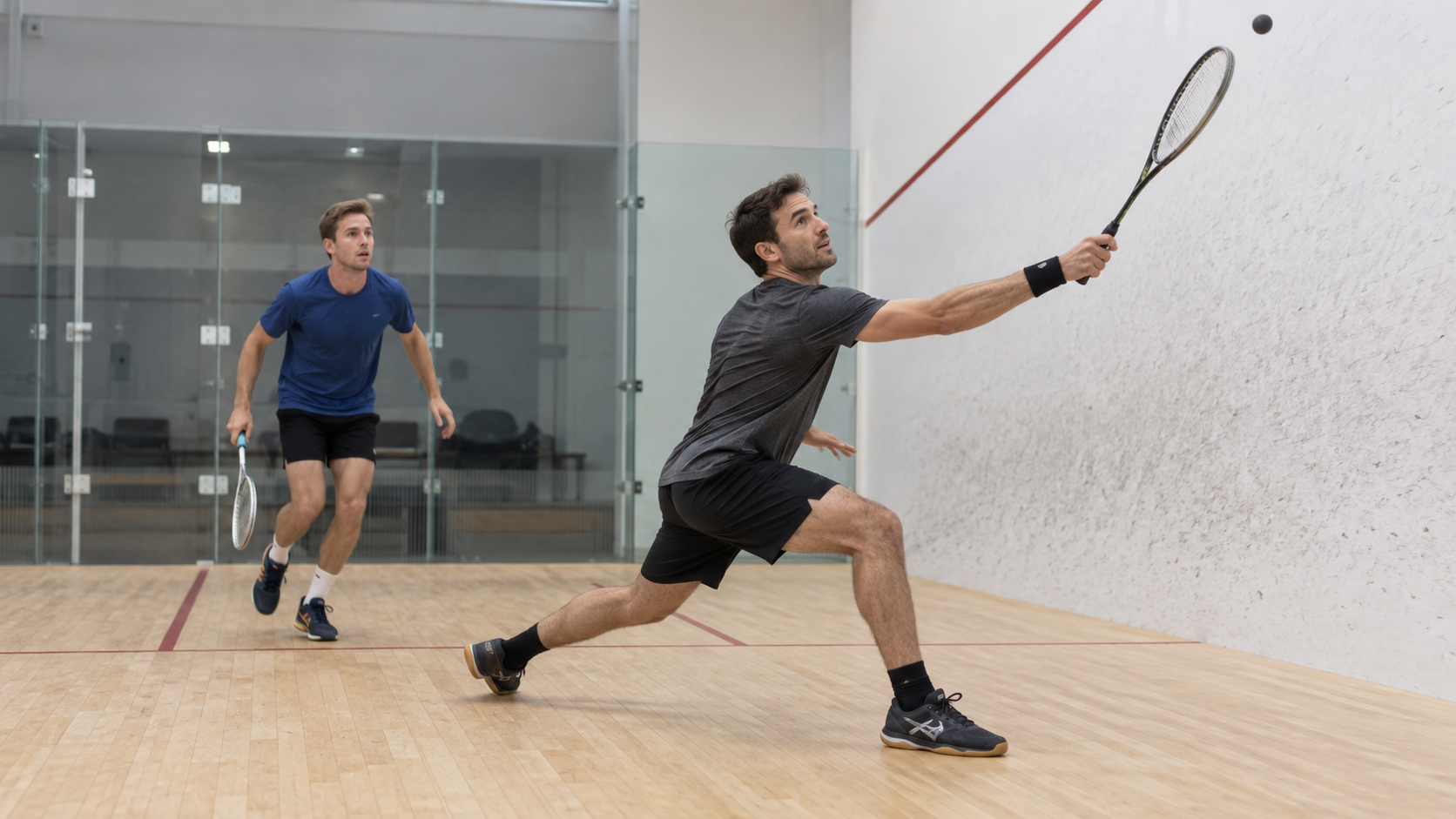
Three points
- **The first defensive objective is survival with position.** Height, width, length and controlled pace matter because they create time and reduce immediate options, not because a defensive shot must look passive.
- **Neutrality is a meaningful gain.** A player under pressure should recognize when the emergency has ended instead of forcing a counterattack from the first merely playable ball.
- **Defense changes with the attacker.** Volleyers threaten passage, shooters threaten the front, power players compress time and retrievers may patiently rebuild, so the escape route must address the actual source of pressure.
The spectacular counterattack from a desperate corner is memorable precisely because it is unusual. Advanced amateurs often remember the success and repeat the attempt under conditions that do not support it. A better defensive hierarchy is survive, recover, neutralize, then reassess.
Defense is not defined by court location. A player in the front may be defending when reaching late around an opponent. A player in the back may attack a ball that sits loose with time and space. Research using situation-awareness clusters in elite squash likewise treats pressure, movement and outcome as part of the tactical state. The direct lesson for amateurs is to diagnose what the ball permits, not what the court diagram names.
Identify the source of pressure
Pressure may come from the ball, the opponent, your body or shared space.
- Ball pressure: tightness, low contact, difficult rebound or pace limits execution.
- Time pressure: the opponent took the ball early or your previous recovery began late.
- Positional pressure: the opponent owns central territory and you strike from behind or outside balance.
- Movement pressure: you arrive at speed, at full reach or without a controlled exit.
- Access pressure: safe swing or direct route is limited by the opponent’s position.
The escape must solve the main source. Hitting harder rarely solves access. A low boast may change direction but does not create time if the opponent already stands forward. A high crosscourt may create time only if it passes outside volley reach.
Tactical-diagnosis table
| Pressure picture | First defensive objective | Useful response family | Recovery priority | Dangerous temptation |
|---|---|---|---|---|
| Tight rear ball with opponent central | Separate ball from wall and create time | High straight length, crosscourt lift when passage is safer | Clear swing, then cover likely volley or boast | Low counterattack from behind body |
| Late front retrieval | Keep ball playable and exit opponent’s path | Lift with height; straight or crosscourt according to access | Clear safely before seeking the T | Counter-drop while falling through contact |
| Hard pace into body or rear corner | Absorb speed and lengthen opponent’s next action | Compact control, height or straight reset | Stabilize first step out | Matching pace without balance |
| Loose previous crosscourt gives opponent volley | Protect the open front and direct angle | Conservative base and early racket | Read opponent before committing | Sprinting mechanically to the T |
| Opponent traps you behind with repeated straight balls | Break pressure without opening easy interception | Improve height/width or use safe change of direction | Recover along direct route | Boasting simply to escape repetition |
| Fatigue causes late contact | Lower technical and movement demand | Larger targets, straight height, controlled pace | Recover breathing and posture between rallies | Attempting a winner to avoid work |
| Interference limits access | Prioritize safety and rules | Stop, request let when appropriate; do not manufacture shot | Respect decision and reset | Playing through a dangerous swing or line |
| Defensive shot reaches neutral quality | Recognize state change | Construct next ball rather than remain passive | Reclaim balanced position | Immediate low-margin counterattack |
Use height only when it passes
Height is the classic defensive resource because it extends flight and may push contact deeper. Its value depends on trajectory. A high ball through the middle can be volleyed before the striker recovers. A tighter straight lift or crosscourt rising outside reach may provide more real time.
Width also creates defense. A ball close to the side wall separates the opponent from free swing space. Length can force a turn or rear-court contact. Controlled pace prevents the ball from returning before recovery, though excessive softness can invite an early step-in.
The advanced defender should evaluate the opponent’s contact rather than admire the arc. Did the opponent take the ball early and balanced? The shot did not escape. Did the opponent retreat, turn or contact near a wall? The defense improved the state even if the rally remains difficult.
Know when neutral has arrived
Players under sustained pressure may remain mentally defensive after the ball becomes neutral. They continue lifting when a balanced length is available, surrendering initiative unnecessarily. Others commit the opposite error: they treat the first ball not struck at full stretch as a counterattacking invitation.
Neutrality usually appears through a combination of signs:
- you contact with a stable base rather than while falling or reaching;
- the ball is in front of the body with a normal preparation window;
- the opponent has begun recovering rather than occupying a fixed attacking position;
- you can clear and reach a useful base before the next contact;
- more than one controlled shot family is credible.
From neutral, construct. A tight length may turn defense into slight advantage. A volley may remove time if it is reached early and balanced. A short attack still needs an opening.
Opponent-response and counter-response table
| Attacker type | How pressure is sustained | Defensive priority | Counter-response after neutrality | Mistake that feeds the attacker |
|---|---|---|---|---|
| Early volleyer | Intercepts loose lifts and removes recovery time | Passage outside reach; tighter straight height | Use width before changing direction | Floating central crosscourt |
| Front-court shooter | Repeats low attacks and hunts weak lifts | Safe height and larger targets; preserve front access | Establish depth before attempting short reply | Automatic counter-drop from imbalance |
| Hard hitter | Compresses preparation with pace | Compact absorption, height and tempo variation | Make hitter generate pace while moving | Returning identical pace to stable position |
| Retriever-constructor | Accepts your escape and rebuilds patiently | Achieve real neutrality, not merely survival | Claim territory with accurate length or volley | Forcing counterattack because rally continues |
| Drop–lob player | Reverses depth and tests first movement | Balanced base and visual patience | Take loose ball early without leaning | Guessing toward the last shot’s opposite |
| Steady pressure player | Produces few errors and repeats width | Use margin, pace variation and one purposeful escape | Build through a visible loose ball | Equating patience with absence of threat |
| Unpredictable shooter | Attacks from positions conventional players would defend | Protect angles without pre-committing | Use the shooter’s poor recovery when safe | Relaxing because shot selection “should” be defensive |
| Economical veteran | Makes you move while retaining own position | Straighten the exchange and reduce self-created diagonals | Test repeated direction after reclaiming T | Trying to overwhelm with immediate pace |
Defend the shared court
Squash defense occurs in confined shared space. A tactical recommendation never overrides access and safety. The current World Squash rules place safety first and govern interference, direct access, fair view and freedom to strike. Advanced amateurs should stop when continuing creates danger and use lets and strokes according to the rules and local officiating context.
This matters tactically because poor clearing often follows desperate counterattack. A player reaches around an opponent, flicks across the court and then cannot clear the direct line. The error begins with selection. A higher, safer return may preserve both the rally and orderly movement.
Separate evidence and interpretation
Research evidence: Elite observational studies identify defensive states involving pressure, time creation and opponent movement. Studies also relate available time and court location to shot selection. Their samples and measures do not prescribe one amateur escape shot.
Established coaching principle: Height, width, length and recovery are standard defensive tools. Recognized coaching distinguishes defending, rallying and attacking, while official rules govern access and safety.
RacketBridge editorial judgment: The survive–recover–neutralize–reassess hierarchy and five-source pressure diagnosis give advanced amateurs a usable review process. They are editorial syntheses rather than validated classifications.
Practice the transition out of pressure
A defensive conditioned game should not simply reward endless lifting. It should make the transition from pressure to neutrality visible and then test whether the player constructs responsibly.
Conditioned-game progression table
| Stage | Condition | Defensive target | Evidence of progress | Transfer test |
|---|---|---|---|---|
| 1. Pressure identification | Feeder or partner begins each rally with a controlled attacking ball; defender names main pressure source afterward | Diagnose ball, time, position, movement or access | Chosen response addresses named pressure | Random starts without advance notice |
| 2. Passage and height | Defender earns a bonus when the ball passes outside volley reach and creates a later contact | Real recovery time | Opponent contacts behind or after turn | Remove target and classify escapes |
| 3. Neutrality call | Either player may call “neutral” after a balanced exchange; partner confirms after rally | Recognize state change | Agreement rises and calls use observable reasons | Silent classification during normal play |
| 4. Two-shot transition | Defender cannot score bonus on first escape; bonus comes from the next controlled construction shot | Avoid desperate counterattack | Escape is followed by width, depth or balanced volley | Ordinary scoring; mark immediate post-defense errors |
| 5. Attacker-specific defense | Attacker adopts volley, pace or short-pressure tendency | Select escape for pressure source | Defender changes trajectory and recovery appropriately | Attacker changes style without announcement |
| 6. Match transfer | Start each game at 7–7 under normal rules | Preserve hierarchy under consequence | Fewer terminal errors from pressured positions | Compare rally review with baseline match |
Use controlled feeds and stop any condition that produces unsafe congestion or fatigue-driven movement. The defensive win is not always a counterattacking winner. Often it is the ordinary ball on which both players must begin solving the rally again.