Article · HP05
Two Sports Need One Good Evening
A cross-sport event succeeds when capacity protects active play, each activity respects beginner safety and participants leave with people and sessions worth returning to
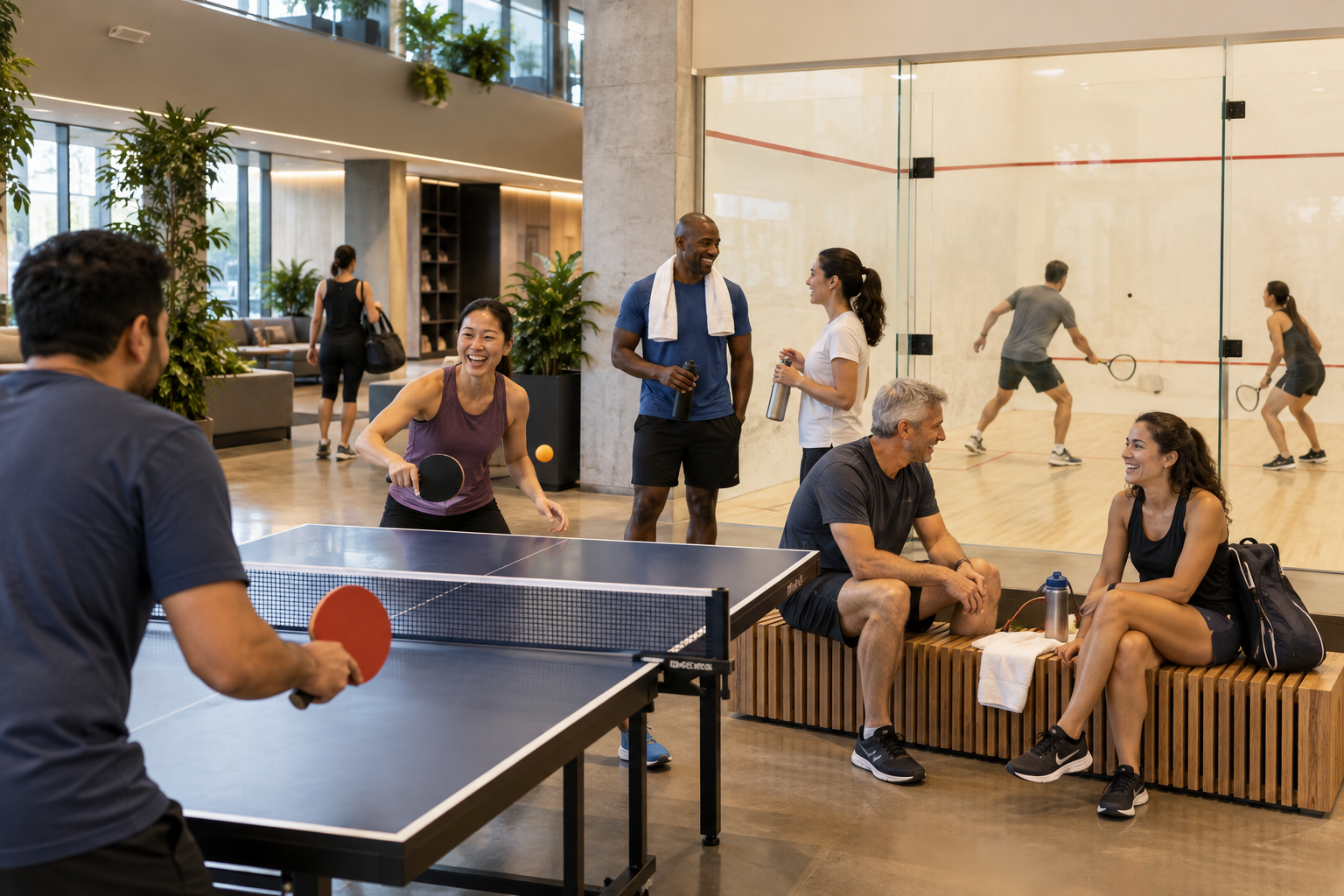
Three points
- **The smaller station determines capacity.** Registrations should follow courts, tables, coaches and useful playing minutes rather than room occupancy.
- **Each sport needs a real introduction.** Participants bring experience from one game while remaining beginners under the other's technique and safety rules.
- **The evening must point forward.** A dated offer in each sport converts novelty into a possible playing life.
“Table-Tennis Players Try Squash” gives every participant both competence and vulnerability. They can explain one game and experience the other without pretending the skills are equivalent. That exchange creates conversation naturally.
Poor logistics can turn it into an audience watching two demonstrations.
Calculate playable capacity
| Resource | Planning question | Capacity risk |
|---|---|---|
| Squash courts | How many beginners share each court and coach? | Unsafe crowding or long waits |
| Tables | How will players rotate without losing instruction? | Many short, unexplained turns |
| Coaches | Who teaches each sport’s safety and contact? | Friends imitate without a framework |
| Equipment | Are sizes, balls and eyewear available? | Participants cannot enter equally |
| Transition | How far apart are activities? | Travel consumes playing time |
Use expected active minutes per person as the capacity test. A full registration list has little value when half the group rarely touches a ball.
Give both sports equal seriousness
| Design principle | Table-tennis station | Squash station |
|---|---|---|
| Safety | Space, legal serve and controlled feed | Eyewear, shared court and stop rule |
| Transfer | Reading, placement and compact readiness | Observation, target and recovery |
| Rebuild | Spin response and short timing | Grip, wall rebound and larger movement |
| Play | Cooperative target exchange | Suitable-ball conditioned rally |
| Return | Named beginner or open-play option | Named lesson or beginner group |
No combined score should pretend to rank ability across the two sports. A cooperative challenge can reward observation, controlled rallies and explanation instead.
Run the evening to a clock
| Time | Activity |
|---|---|
| 0–10 | Welcome, introductions and common movement preparation |
| 10–35 | First coached sport in small rotations |
| 35–45 | Water, comparison and equipment change |
| 45–70 | Second coached sport |
| 70–88 | Mixed cooperative challenge |
| 88–100 | Feedback, mutual contact opt-in and dated next offers |
The example must adjust to venues. Photography consent, emergency information and contact sharing should remain separate choices rather than conditions of participation.
Measure more than enjoyment
Afterward, record attendance, actual active minutes, whether the instruction matched the promise, next-offer requests and verified second visits. Ask which sport, person or learning problem motivates the return. Positive atmosphere matters; it does not reveal whether the operating design worked.
RacketBridge should announce an event only after confirming host, venue, time, capacity, price, equipment, language, cancellation terms and next sessions. Friends, functional fitness and fun emerge from a well-built evening, not from the slogan alone.
Design the social transition
Conversation should not depend on chance during equipment changes. Pair participants from different source groups for the shared warm-up, rotate them through a cooperative task and provide a brief question during the break: what familiar skill helped, and what surprised you?
Contact sharing remains opt-in. The organizer can invite both people to a dated follow-up without exposing personal details. A participant who enjoyed the event but declines further contact still received the promised experience.