Article · HP03
A Welcome Must Explain What Happens Next
Individual registration becomes meaningful only when an organizer names the host, placement method, rotation and second-session route for a person arriving without a partner
Three points
- **“Everyone welcome” describes an intention, not an operating process.** A newcomer needs to know who will greet, place and include an unaccompanied participant.
- **Social comfort and playing compatibility require design.** Level, pace, language, purpose and rotation should be visible before the first awkward negotiation.
- **A first visit can succeed without instant friendship.** Learning names, receiving suitable play and accepting a dated return invitation provide enough progress.
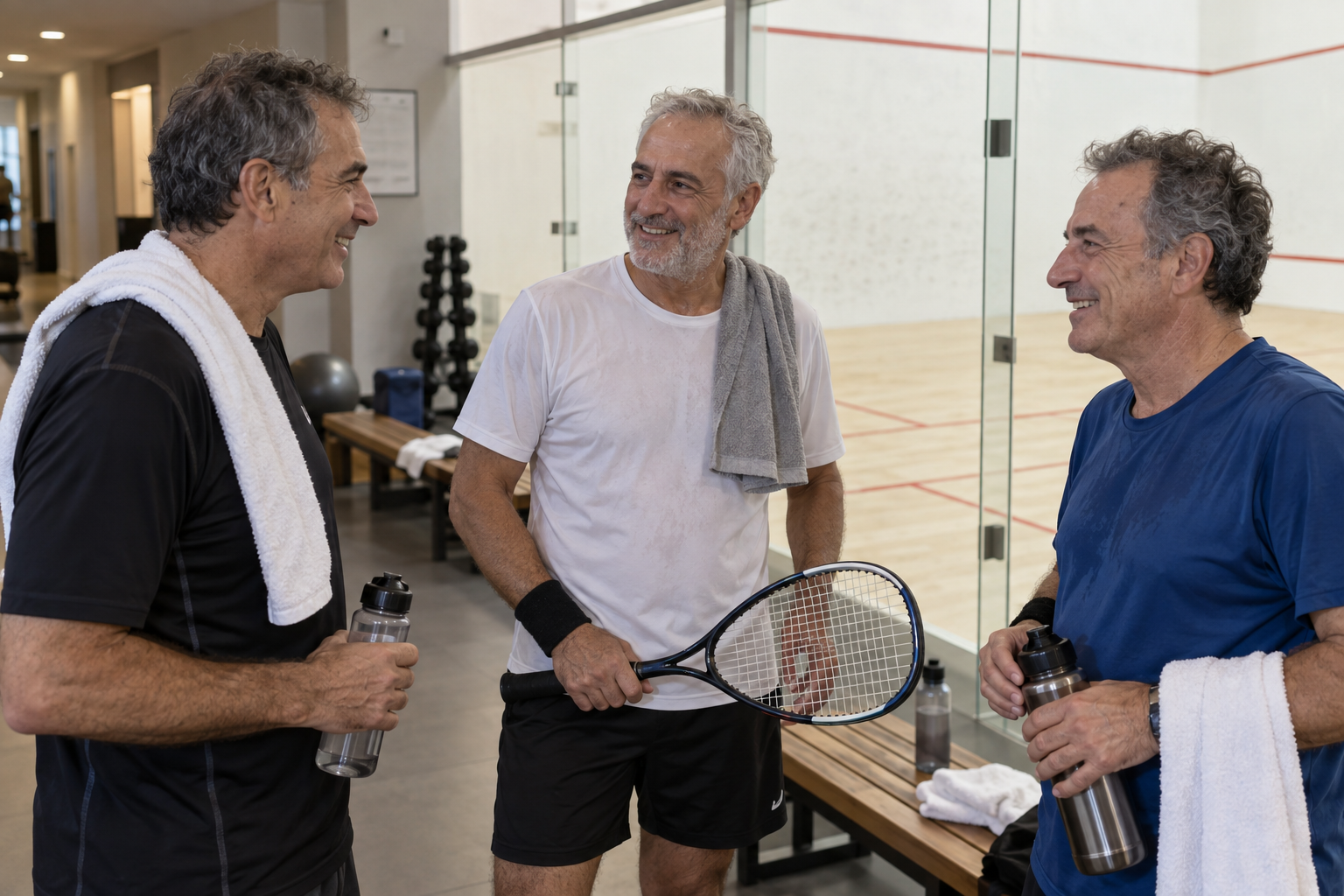
Many adults would try a racket sport if they already had a partner. The absence of one is treated as a personal problem even when the activity advertises itself as social. A prospective player reaches the door, sees established pairs and must ask strangers to reorganize their evening.
A genuinely welcoming session designs that moment away.
Publish the arrival process
| Moment | Information promised before booking | Host action |
|---|---|---|
| Registration | Individuals may attend alone | Collect level, pace and contact preference |
| Entrance | Exact meeting point and host name | Greet before the player searches the venue |
| Placement | How experience and purpose are described | Explain the first pairing |
| Rotation | Timing and partner-change method | Prevent private negotiation of inclusion |
| Finish | Dated next options | Ask for an explicit opt-in |
“All levels” can mean beginner instruction, mixed social play or experienced players tolerating a broad range. Those are different products. The organizer should state whether complete beginners receive coaching and whether an established rating is required.
Match the first experience, not a permanent friend
| Dimension | Useful first-session question |
|---|---|
| Experience | What rally or game can you play now? |
| Purpose | Instruction, cooperative practice, social play or competition? |
| Pace | Light, moderate or demanding today? |
| Communication | Preferred language and amount of coaching feedback? |
| Social format | One partner, rotating small group or hosted event? |
| Contact | May partners exchange details after mutual agreement? |
A cross-sport participant should name both identities: “I play table tennis and this is my first squash session.” Prior expertise deserves respect without creating a false converted level.
Protect dignity through structure
Forced friendliness can feel as uncomfortable as neglect. A host should introduce people around the task: “You both want controlled rallies and are new to this group.” The explanation gives the pairing a reason without making personality judgments.
Contact sharing should require mutual choice. RacketBridge can send a follow-up invitation without revealing a phone number automatically. A declined second game should carry no penalty and need no public explanation.
| Weak practice | Better design |
|---|---|
| Tell newcomer to “mix in” | Publish a rotation controlled by the host |
| Rank by age or appearance | Ask for current ability, pace and purpose |
| Add newcomer to a messaging group immediately | Obtain explicit contact and group consent |
| Promise a permanent partner | Offer one suitable session and review |
| Judge success by attendance | Track suitable play and voluntary return |
Measure the welcome
Count whether unaccompanied registrants arrived, received the promised active time, met at least one named host, understood the next offer and returned within the interval defined by the program. Ask non-returners whether timing, level, cost, interaction or the activity itself influenced the choice.
Research linking social-group membership with later activity supports taking continuity seriously, but it does not prove that one event creates friendship or health. RacketBridge should test the modest mechanism it can influence: reduce uncertainty, provide a suitable introduction and make another meeting easier to choose.