Article · HP02
Return to the Player You Are Now
Experience survives a break unevenly, so a successful return begins with present movement, timing and health rather than a test against remembered ability
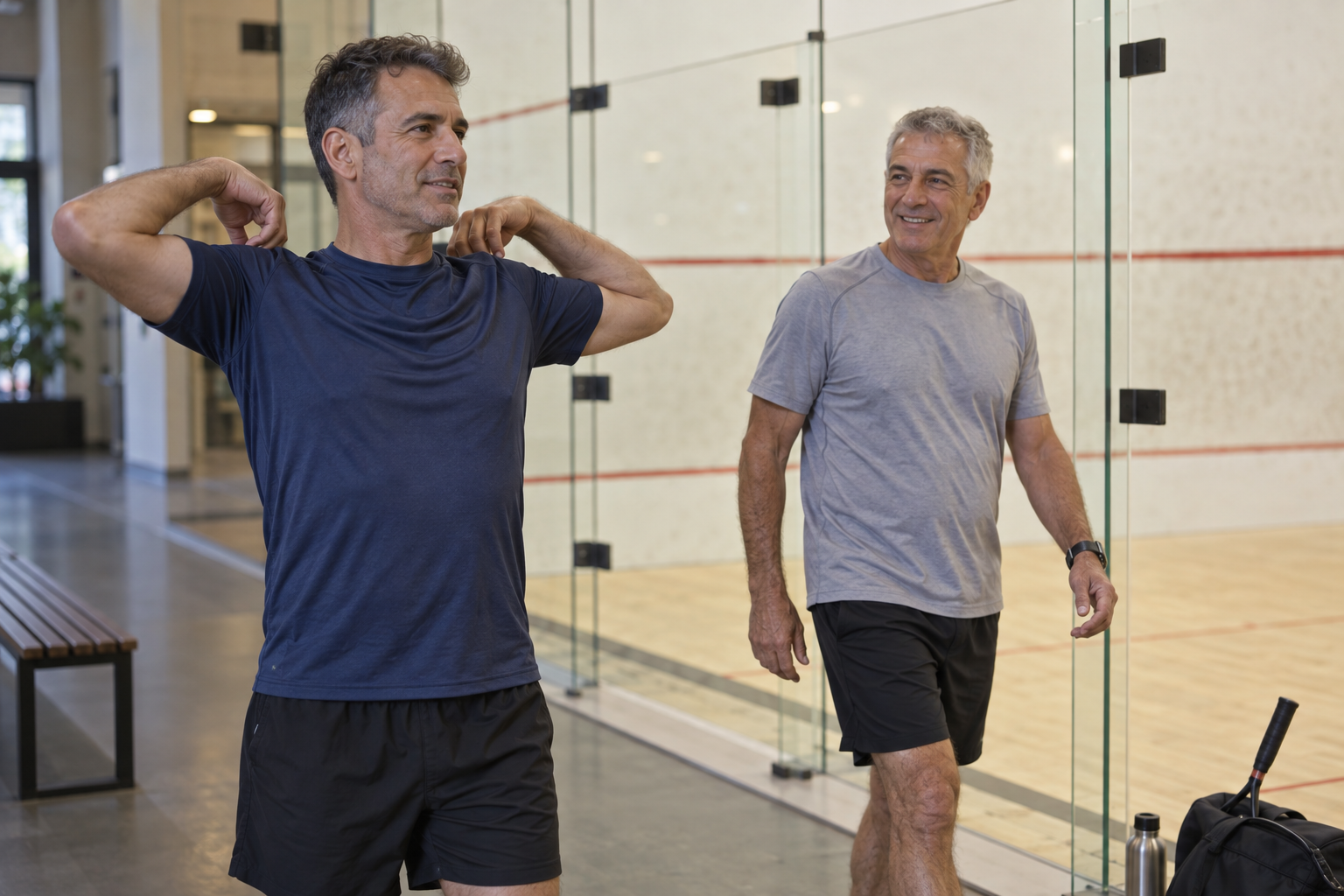
Three points
- **Past level supplies context, not clearance.** Tactical knowledge may return before braking, repeated effort or confident contact.
- **The first session should permit adjustment.** Controlled practice, coaching and conditioned games reveal current capacity more safely and clearly than an immediate unrestricted match.
- **Success means earning the second visit.** The player should leave with useful evidence, normal recovery and a specific next session rather than a verdict on lost ability.
Memory edits the return. A player remembers the clean winner and familiar movement, not the conditioning built around three weekly sessions. Years later, the tactical picture may still appear quickly while the body arrives late.
The mismatch can produce embarrassment or an unnecessary physical test. Neither helps. The returning player needs a current profile.
Describe the present starting point
| Information | Useful description | Weak substitute |
|---|---|---|
| Previous play | Club squash twice weekly until five years ago | “Advanced” |
| Current activity | Walks regularly; no recent change-of-direction sport | “Generally fit” |
| Return purpose | Rebuild controlled rallies with an old friend | “Get back in shape” |
| Relevant history | Previous injury, illness or symptoms disclosed appropriately | Silence or self-diagnosis |
| Preferred first load | Thirty minutes with breaks and adjustable pace | Immediate full match |
People returning after illness, significant inactivity or with concerning symptoms may need medical guidance before vigorous play. A coach can scale the sport but should not diagnose unexplained pain, chest symptoms, fainting or neurological problems.
Expect abilities to return at different rates
| Capacity | What may remain | What may lag |
|---|---|---|
| Tactical recognition | Familiar patterns and opponent reading | Timely action under pressure |
| Stroke memory | General shape and intention | Spacing and repeatable contact |
| Movement | Knowledge of routes | Braking, balance and recovery speed |
| Match confidence | Understanding of competition | Trust in present physical response |
| Endurance | General activity base | Sport-specific repeated efforts |
This unevenness explains why one excellent rally proves little. The session should examine repeated quality and next-day response.
Use four stages with one change at a time
| Stage | Session design | Progress evidence |
|---|---|---|
| Re-entry | Controlled movement and cooperative hitting | Normal movement and no concerning symptoms |
| Repetition | Modest sessions separated by recovery | Technique survives the final minutes |
| Variation | Add range or two-option choice | Braking and decisions remain controlled |
| Competition | Short conditioned games | Safety and judgment survive score |
| Open play | Suitable opponent and limited match | Recovery supports another planned session |
Do not increase frequency, duration and intensity together. The rule does not guarantee safety; it makes cause and effect easier to observe.
Define success before arriving
The first visit can succeed when the player moves without concerning symptoms, sustains several controlled rallies, identifies one current limitation and wants to return. Winning, reproducing an old pace or purchasing equipment should not dominate the scorecard.
Borrowing equipment may prevent an early purchase based on old preferences. A livelier squash ball, smaller tennis court area or conditioned rule may produce a better sample of actual play. Adaptation does not diminish the return; it creates enough good information to progress.
The player should book or identify the next session before memory rewrites this experience too. A return becomes real when the second appointment enters the calendar.